
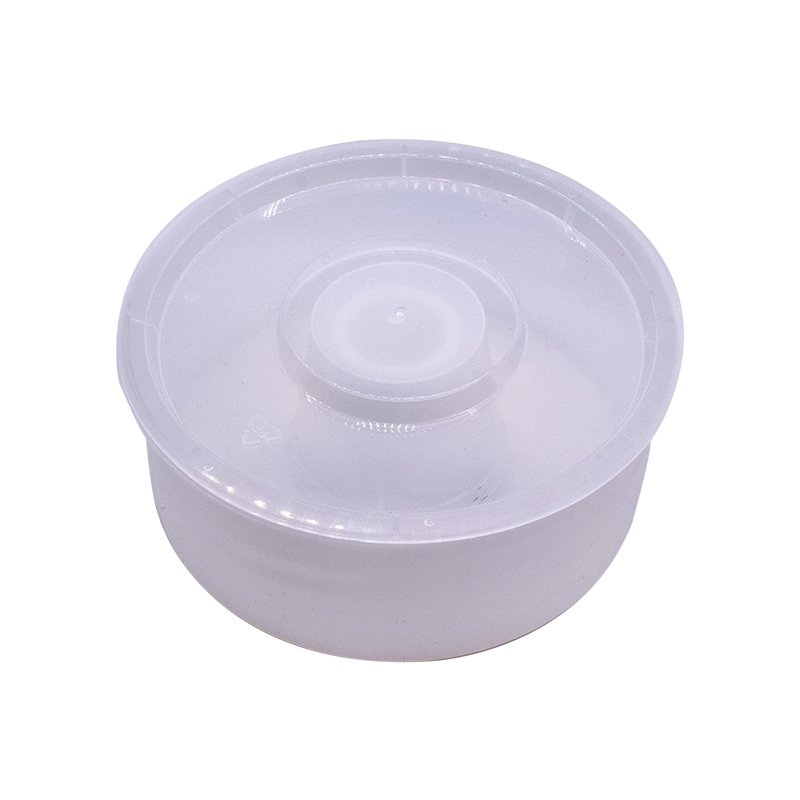
Two numbers decide most of a supplemental feeding programme: how much sugar goes into the water, and when. Get either wrong and the colony does the opposite of what you wanted — spring feed that should have triggered brood rearing ends up sitting in the feeder and fermenting, or autumn feed arrives too late for the bees to ripen it before the cluster forms.
The standard advice is 1:1 in spring and 2:1 in autumn. That is correct, but it is a summary, not an explanation. Once you are feeding more than a handful of colonies, the detail matters because the cost of getting it wrong scales with colony count.
What the ratio is actually changing
The ratio is sugar to water, normally quoted by weight. Because 1 kg of sugar weighs the same as 1 litre of water, a 2:1 mix is simply 2 kg of sugar dissolved in 1 L of water.
What changes with concentration is what the colony thinks is happening. Thin syrup behaves like nectar: it signals a flow, stimulates the queen to lay, and gives workers the carbohydrates they need to draw new comb. Thick syrup behaves like honey: it is closer to the finished product, so the bees spend less energy evaporating water off it and can cap it as stores faster.
That difference in evaporation work is the whole point. Bees have to remove water before they can cap syrup. A 1:1 mix is roughly half water; a 2:1 mix is roughly a third. In autumn, every litre of unnecessary water is energy the colony spends at exactly the wrong time of year, and moisture it then has to vent from a hive that is about to be sealed up for winter.
Which ratio, and when
| Goal | Ratio (sugar:water by weight) | Typical delivery | Why this ratio |
|---|---|---|---|
| Spring build-up or queen rearing | 1:1 | Small amounts, 1–2 L every few days | Mimics nectar; stimulates laying and comb drawing |
| Emergency feeding, light colony | 1:1 | Small, frequent | Easy for a small cluster to take up quickly |
| Autumn winter stores | 2:1 | Large amounts, 5–10 L weekly until stores are sufficient | Less water to evaporate; stable in the feeder |
| Replacing harvested honey | 2:1 | Large, started immediately after supers come off | Bees need time to ripen and cap before cold |
| Drought or nectar dearth support | 1:1 | Small, frequent | Keeps brood rearing going without storing |
Two caveats sit on top of that table. First, concentration is only half of the stimulus — delivery rate matters too. The same total volume fed slowly over many days stimulates more than the same volume dumped in at once. Second, do not feed syrup while honey supers are on the colony. During a flow the bees may store syrup rather than consume it, and the honey is then no longer what it claims to be.
Timing: the part that actually kills colonies
Autumn feeding fails on timing far more often than on ratio. The rule is to start as soon as the supers come off and to finish while the bees can still process it — before temperatures consistently drop below about 10°C. Feed that is still uncapped and unprocessed when winter sets in adds moisture to the hive, and a wet hive in a cold cluster is a genuine cause of winter loss.
Because this runs on a calendar, and because the calendar flips between hemispheres, the same programme lands in different months:
| Window | Northern hemisphere (North America, Europe) | Southern hemisphere (Australia, NZ, southern South America) |
|---|---|---|
| Stimulation feeding (1:1) | Early spring, roughly March–May depending on latitude | Late winter to early spring, roughly August–October |
| Supers off, stores feeding starts (2:1) | Late summer into autumn, roughly August–October | Late summer into autumn, roughly February–April |
| Feeding must be finished | Before sustained temperatures fall near 10°C | Before sustained temperatures fall near 10°C |
| Dry sugar top-up as backup | Mid-winter checks, if stores run short | Mid-winter checks, if stores run short |
If you are buying feeders for export into both hemispheres, this table is the reason to hold stock year-round rather than seasonally; your two customer groups are six months out of phase.
The sugar itself, and what not to use
White granulated cane or beet sugar (sucrose) is the safe standard. The list of things not to use is short and worth being blunt about: brown sugar, raw sugar, molasses and jaggery contain impurities the bees cannot digest, ferment in the comb and contribute to dysentery. Dry sugar is largely ignored or thrown out by the colony, so it is an emergency backup placed on the inner cover rather than a routine feed.
Feeding honey back to bees is a separate question. Extracted honey can be used, but honey from an unknown source can carry American foulbrood spores, and old or heat-treated honey can contain hydroxymethylfurfural at levels that are toxic to bees. For a commercial operation, feeding unknown-origin honey is not a risk worth taking.

Fermentation, yeast and feeder hygiene
Syrup left in a feeder sours. Yeast grows in it, and rising yeast concentrations are toxic to adult bees. The practical rules follow directly:
- Mix only what you will use immediately. Do not store mixed syrup between seasons.
- Clean and sanitise feeders between fills.
- Discard anything that smells sour or shows signs of fermentation.
- Feed late in the day during a dearth to reduce robbing pressure.
- Repair leaking feeders promptly; spilled syrup triggers robbing and draws pests.
On larger operations, standardising the feeder type, the mix, the cleaning procedure and the refill schedule is worth more than optimising any single one of them. Crews make fewer mistakes when every yard looks the same.
How much is enough, and how to check without opening the hive
Autumn guidance from New South Wales primary industries is to feed 5–10 litres weekly until the colony has sufficient processed stores, and to keep feeding on that schedule rather than in one large dose. The weekly rhythm matters: it gives the bees time to ripen and cap each round before the next arrives.
Assessing progress does not require opening the hive. Hefting — lifting one side of the box to judge weight — is faster, disturbs the colony far less in cool weather, and is the method most commercial crews actually use. Aim for a box that feels heavy at the back and has sealed stores across the top of the brood frames when you do look.
Two rules follow from that. Feed until stores are sufficient, not until the feeder is empty, and stop before the weather turns. A colony that has capped its stores is in a materially better position than one sitting on a full feeder of unprocessed syrup when the first cold snap arrives.
Feeding and disease: two specific traps
Feeding interacts with disease in two ways worth planning around.
First, nosema. Liquid feeding in cool months increases hive moisture and manipulation at exactly the time the colony is clustered, and both are associated with higher nosema pressure. Where a colony can carry enough natural Stores, leaving it alone is often the better call. Minimising autumn manipulation is a disease control measure as much as a labour saving.
Second, robbing. A dearth plus open syrup plus weak colonies is the classic robbing setup, and robbing spreads pathogens between colonies faster than almost anything else you can do. Feed late in the day, reduce entrance width on weak colonies, and never leave spilled syrup around a yard.
Feeder choice follows the ratio
Concentration and feeder design are linked. Thin 1:1 syrup is delivered slowly in small volumes, which suits dripping feeders, jar feeders and contact feeders. Thick 2:1 autumn syrup is delivered in volume, which needs capacity: top feeders, rapid feeders and frame feeders.
Entrance feeders are cheap and easy to check without opening the hive, which is useful in spring, but they hold little and are the most robbing-prone design. Top feeders hold far more, do not encourage robbing, and can be refilled without disturbing the colony — which is why they dominate autumn feeding on commercial yards.
When you specify feeders for a bulk order, three things decide whether they survive a season in the field: material stability under UV, a design that does not drown bees, and a lid that seals when the hive is moved. A feeder that leaks in transit is worse than no feeder.
Mixing it: the part that quietly causes problems

Dissolving the sugar looks trivial, which is why it is where most of the avoidable damage happens. Heat the water, not the syrup. Water at roughly 35–40 °C dissolves granulated sugar quickly enough for a 200 L batch; boiling water poured onto sucrose drives acid-catalysed inversion and generates hydroxymethylfurfural (HMF), and HMF is toxic to bees. The same chemistry is why syrup left in a hot drum for a fortnight in August is a different product from the syrup that went in.
Mix in a food-grade container that has not held anything else. Detergent residue, fuel, or fertiliser dust in a repurposed drum is a contamination route that no amount of correct ratio will fix. Stir until the solution is completely clear — undissolved crystals on the bottom of a feeder are not slow-release food, they are a fermentation site.
| Symptom in the feeder | Usual cause | What to change |
|---|---|---|
| Crystals forming within days | Ratio too concentrated for the temperature, or sugar not fully dissolved | Move to 1:1, raise mixing water temperature to 35–40 °C, stir to clear |
| Gas bubbles, sour smell | Fermentation by wild yeast | Empty and clean the feeder; batch size down so it is consumed in 3–5 days |
| Bees ignoring it | Natural forage available, or syrup too cold | Wait for a nectar dearth; feed in the late afternoon |
| Dead bees floating | Drowning in a feeder without a float or rough climbing surface | Add floats or a textured ramp; check the design before the next order |
Store unused syrup cool and use it quickly. Food-business hygiene rules for the EU are set out in Regulation (EC) No 852/2004 and the food-contact materials framework; the US equivalent sits in the cGMP provisions at 21 CFR Part 110.
Before the next feeding round
Check four things and you will avoid most feeding failures: is the ratio matched to the season’s goal, is there still enough warm weather left for the bees to ripen it, is the feeder clean, and are the supers off. Guidance on seasonal bee nutrition is published by the Honey Bee Health Coalition, and the underlying bee nutrition and management research sits with the USDA Agricultural Research Service. For UK-specific disease and feeding guidance the National Bee Unit is the reference point.
On equipment: the bee feeders and medicine range covers the main formats, from contact feeders through to large-capacity units. For autumn volume feeding, a high-capacity top feeder such as the 4 kg American-style plastic feeder cuts refill trips, while a 2 L round feeder suits smaller spring stimulation rounds. Where frames are being drawn at the same time, pair the feeding programme with foundation sheets so the syrup goes into comb rather than into nothing.