

Cell cups are the least discussed part of a queen rearing programme and one of the most consequential. They sit between the graft and the colony, and everything downstream — acceptance, larval survival, the number of finished cells you can bank — depends on the cup doing its job consistently. Choose badly at volume and the failure shows up as a spread of uneven, half-finished queen cells rather than as an obvious defect.
There are two main approaches. Plastic cell cups are moulded, mounted on cell bars and reused season after season. Silicone moulds are used to press beeswax cups, which the colony then draws out and which are consumed or rebuilt rather than cleaned. They are not variations on the same product; they suit different types of operation.
What the cup has to do
A cell cup holds a grafted larva in the right orientation at the right depth while nurse bees in a cell builder colony feed it and draw the cell down around it. That is the whole job, and it imposes four requirements:
- Depth and shape. The larva must sit close enough to the rim to be reached and fed, but not so close that it dries out or falls.
- Surface the bees will accept. Acceptance is a chemical and tactile question; bees are more willing to work material they recognise.
- Rigidity during handling. Cups get moved, carried to mating nucs, and clipped to bars. They have to survive that.
- Cleanability or disposability. Whatever goes into a hive comes out coated in propolis and wax.
Plastic cups and wax cups solve those four differently, which is why the choice is not really about preference.
Plastic cups: throughput and consistency
Plastic cell cups are the standard for volume programmes. They are dimensionally identical every time, they mount on standard cell bars without glue or wax, they release a finished queen cell cleanly, and they can be scraped and reused across many rounds.
For an operation rearing queens in the hundreds or thousands, that consistency is the entire argument. Variation is what kills a rearing schedule: if cups differ in depth, grafted larvae sit at different heights, feeding is uneven, and the batch comes out staggered. Staggered batches are the enemy of mating nuc planning, because you need cells ready on the same day the nucs are ready to receive them.
| Factor | Plastic cell cups | Beeswax cups pressed from a silicone mould |
|---|---|---|
| Consistency between cups | Identical, moulded | Close, but depends on mould technique and wax temperature |
| Reusability | Cleaned and reused across seasons | Single use in practice |
| Colony acceptance | Good once waxed or primed | Generally strong; bees recognise the material |
| Setup time per round | None beyond mounting | Moulding time before grafting |
| Cleaning burden | Scraping and sanitising between rounds | None |
| Cost profile | Capital up front, low marginal cost | Recurring wax and labour cost |
| Best fit | Commercial, repeat-schedule, high count | Small batches, breeding programmes, wax-purity priorities |
One practical caveat: plastic cups usually need priming. A thin film of beeswax or a drop of royal jelly in the cup before grafting improves acceptance markedly. Skipping that step is the most common reason people conclude plastic cups do not work.
Silicone moulds and wax cups: why they persist
Wax cups have one advantage plastic cannot match: the colony treats them as its own material. Bees draw them out readily, and for breeding programmes where the queen is being raised on nothing but her own colony’s wax, that matters. It also removes any question of residue from a synthetic material.
The cost is labour and repeatability. Wax has to be warmed to the right working temperature, the mould has to be used consistently, and the resulting cups vary slightly with technique. At twenty cells that is fine. At two hundred it is a bottleneck, and at two thousand it is not viable.
Wax temperature is the variable to control. Too cool and the cup cracks or releases badly; too hot and the wall thins and the cup loses rigidity. Operators who use wax cups successfully standardise the temperature and the dipping time the same way a commercial kitchen standardises a recipe.
Grafting technique interacts with the cup
The cup and the graft are one operation, and problems blamed on cups are often graft problems. Two failure modes account for most losses.
Larva too old. Royal jelly deposition and the larva’s own development both move fast. Larvae transferred later than the first day produce poorer queens, and no cup design compensates for that. Plan the round backwards from grafting time: a breeder colony has to be set up so that the right-age larvae are available on the day the cell builder is ready, not the other way around.
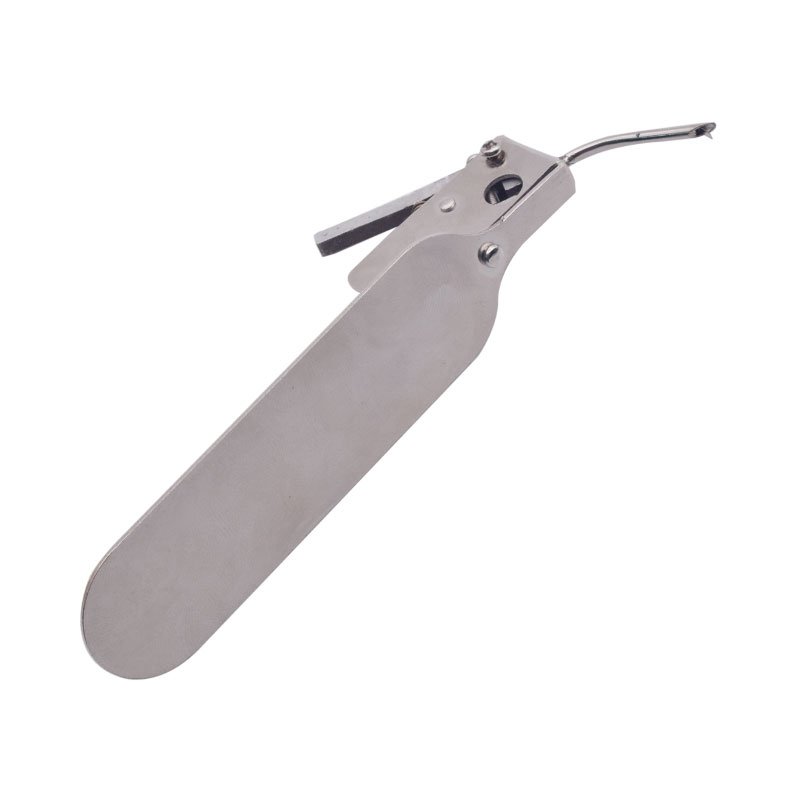
Damage during transfer. A larva that is rolled, crushed or allowed to dry on the tool will not be fed out, and it will often be removed by the nurse bees within hours. This is where tool choice matters: a grafting tool with a fine, flexible tip that slides under the larva rather than lifting it is the difference maker, and it is worth matching the tool to the operator rather than to the catalogue.
Timing inside the cell builder matters too. Cups should go into a strong, well-fed colony with abundant nurse bees, and the round should be short. A cell builder that is short of nurse bees or pollen will start cells and then abandon them, which looks like a cup failure and is not.
Volume changes the answer
The decision is mostly a function of scale, and the crossover is lower than people expect.
Under roughly 50 queens per round, wax cups pressed from a silicone mould are practical. Set-up time is manageable and the acceptance benefit is worth having.
Between 50 and a few hundred, most operations move to plastic. The cleaning burden is real but the consistency pays for it, and mating nuc scheduling starts to depend on uniform batches.
Above a few hundred, plastic is effectively the only workable option, and the specification questions shift to the cup’s mounting standard, the bar spacing, and how quickly a batch can be cleaned and turned around.
For distributors, this means the two products sell to different customers and should not be merchandised as substitutes. A buyer ordering plastic cups in volume is running a commercial schedule. A buyer ordering a silicone mould is usually a breeder or a smaller-scale producer, and is likely to be interested in the rest of the rearing kit as well.
The specification questions for a bulk order
If you are buying cell cups for resale or for a large programme, four things decide whether they work in the field.
- Mounting standard. Does the cup fit the cell bars you already stock? Cup base diameter and bar hole spacing are not universal, and a mismatch is a total failure rather than a minor inconvenience.
- Material. Food-safe, and stable at hive temperature. Low-grade plastic deforms in a hot cell builder colony.
- Internal geometry. Consistent depth is what produces consistent batches.
- Pack quantity and damage rate in transit. Cups are light and crushable; how they are packed matters more than buyers expect, and crushed cups are a common complaint on long shipments.
The same logic applies to the rest of the rearing kit. A grafting tool that cannot pick up a larva without damaging it will undo good cup choice, and the two should be specified together.
Cleaning and turnaround between rounds
Plastic cups have to be cleaned, and how you clean them determines whether they keep working. Propolis and wax build up on the rim and inside the cup; left in place, that residue changes the internal depth and makes the next round inconsistent — the same failure the cups were chosen to avoid.
Scrape them mechanically, then wash in hot water. Avoid aggressive solvents that leave a residue the bees will reject, and avoid anything that leaves a film on the internal surface. Dry them fully before storing, because cups stored damp grow mould and the next season starts with a contamination problem.
Keep a counting system. Cups get lost, and a programme that started with 200 and is down to 140 will quietly produce short rounds. Reorder before the season rather than midway through it.
Deciding between the two: what actually differs

The choice is not about which cup is better. It is about where your bottleneck sits. If the bottleneck is skilled labour at the grafting bench, the answer is the route that removes steps from the bench. If the bottleneck is wax of known provenance, the answer is the route that does not depend on it at all.
| Decision factor | Plastic cell cups | Silicone mould + wax cups |
|---|---|---|
| Prep before grafting | Unpack and mount; no wax handling | Melt wax, dip, cool, mount — a session before the session |
| Consistency | Moulded dimensions, batch to batch | Depends on wax temperature and dipping technique |
| Wax source risk | Removed — the cup is the substrate | Present — the wax is the substrate |
| Handling in cold weather | Rigid, unaffected by temperature | Wax cups become brittle when cold |
| Freight and storage | Light, nests, low breakage | Heavier per 100 cups, crushable if packed tight |
| Best fit | Volume programmes, standardised benches | Small batches, breeding work, operations with clean wax |
Most commercial programmes land on plastic for the production run and keep a mould for the breeding stock, where the ability to work with your own wax matters more than the extra handling.
What to pair them with
Cups do not work alone. A rearing round needs a grafting tool matched to the operator’s hand, cell bars that hold the cups at the right spacing, a cell builder colony with enough nurse bees to feed the batch, and somewhere to put the finished cells — mating nucs or a queen bank.
The queen rearing and queen cage range covers the full sequence. For the wax route, a silicone cell cup mould presses consistent wax cups from your own beeswax. For volume, plastic cell cups mounted on standard bars are the practical choice, paired with a grafting tool such as the stainless steel German grafting tool. Where royal jelly is being harvested alongside rearing, a soft-head royal jelly pen belongs in the kit as well.
Rearing sits on top of colony strength and nutrition; the Honey Bee Health Coalition publishes management guidance on both, the USDA Agricultural Research Service runs the underlying breeding and genetics research, and FAO’s pollination work is the reference for why queen quality matters beyond the apiary.