
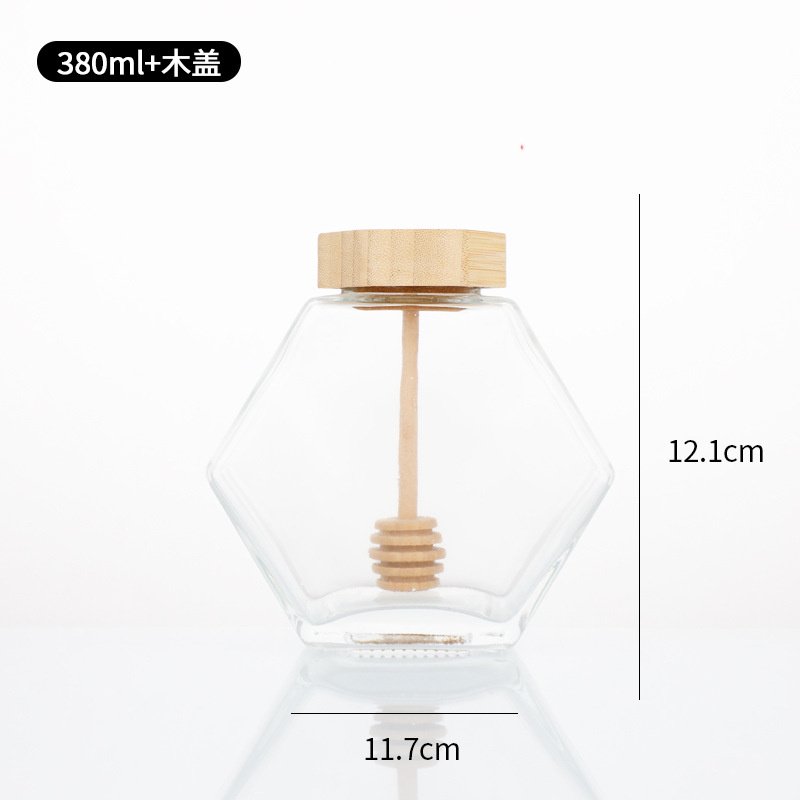
Honey labelling is where a lot of otherwise sound export deals break. The product is fine, the container is fine, and the label is wrong — usually on origin wording or a missing nutrition panel — and the shipment either gets relabelled at cost or refused. The rules are not obscure, but they differ enough between the EU and the US that a label designed for one market will usually fail in the other.
This is written for packers and for distributors buying private-label honey packaging. It is not legal advice for a specific product; it is the structural checklist that catches the expensive errors before artwork goes to print.
The EU position: honey has its own rules on top of the general ones
In the EU, honey is subject to two layers. The general food labelling rules in Regulation (EU) No 1169/2011 apply to everything, and Council Directive 2001/110/EC adds honey-specific requirements on top — notably on origin and on what may be called honey at all.
The practical consequences for a label:
- Reserved name. The designation “honey” is reserved for the product as defined by the Directive. Products that do not meet the composition criteria cannot use it.
- Country of origin. The country or countries where the honey was harvested must be stated. For blends, the standard formulations are “blend of EU honeys”, “blend of non-EU honeys” or “blend of EU and non-EU honeys” — a plain “origin: EU and non-EU” wording that does not follow the accepted formulations is a common reason for a label to be challenged.
- No additions. Nothing may be added to honey, and the composition criteria — sugar content, moisture, water-insoluble content, electrical conductivity, free acid, diastase activity and HMF — are part of the definition, not optional quality targets.
- Full FIC element set. Name of the food, ingredient list where relevant, allergens, net quantity, durability date, storage conditions, the food business operator’s name and address, country of origin, and the nutrition declaration.
- Lot identification. A lot mark is required, normally in addition to and distinguishable from the date mark.
The European Commission’s honey sector page is the reference point for the marketing standards, and the Codex Alimentarius honey standard is the international baseline that many non-EU markets align to.
The US position: no standard of identity for honey, but full nutrition labelling
The US starts from a different place. FDA does not maintain a standard of identity for honey, so there is no equivalent of the EU’s composition-based reserved name. The mandatory elements come from the general food labelling rules in 21 CFR Part 101.
The label still has to carry:
- Statement of identity on the principal display panel — the common or usual name of the food.
- Net quantity of contents, in both metric and US customary units.
- Ingredient statement, in descending order by weight, where the product has more than one ingredient.
- Name and address of the manufacturer, packer or distributor.
- Nutrition Facts panel in the prescribed format, including serving size, calories and the mandatory nutrient line-up, with added sugars declared separately.
- Allergen declaration where applicable.
USDA grade standards for extracted honey exist but are voluntary; using a grade claim means meeting the standard, so treat it as a commitment rather than a decoration.
The single most common US error on imported honey is a Nutrition Facts panel produced from an EU-style layout. The formats are not interchangeable: different nutrient order, different units, different serving-size basis, and different rounding rules.
Side by side
| Element | EU | US |
|---|---|---|
| Reserved product name | Yes — “honey” restricted by Directive 2001/110/EC | No standard of identity; common or usual name applies |
| Country of origin | Mandatory; prescribed wording for blends | Not generally mandatory for honey under FDA labelling rules |
| Nutrition declaration | Mandatory per 100 g / 100 ml: energy, fat, saturates, carbohydrate, sugars, protein, salt | Mandatory Nutrition Facts panel per serving, plus added sugars |
| Lot code | Required | Not an FDA labelling requirement; widely used for traceability |
| Net quantity | Metric | Metric and US customary |
| Business operator | Food business operator name and address | Manufacturer, packer or distributor name and address |
| Allergens | Declared, emphasised in the ingredient list | Declared per FALCPA requirements |
Lot coding: the part buyers under-specify
Lot coding is a requirement in the EU and a commercial expectation almost everywhere else, and it is the element most often left until packing day. Decide it early, because it interacts with the container and the packing line.
Three decisions matter. What the code encodes — the minimum useful set is production date, line or shift, and source batch. Where it goes — a lot code printed on a lid or a neck band can be lost when the lid is discarded, so put it somewhere that survives in the consumer’s kitchen. And how it is applied — inkjet, laser or label, each with different implications for line speed and legibility on a curved or textured surface.
For honey specifically, traceability has a second purpose: if an adulteration or residue question is raised later, the lot code is what limits the recall to one batch instead of one container.
Label artwork and the container are one decision
Label failures are often container failures in disguise. Four interactions catch people out:
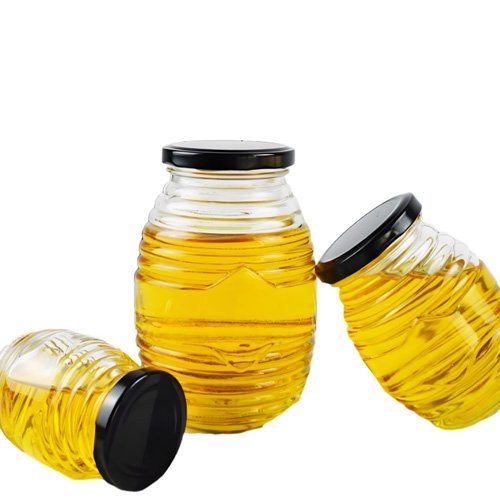
- Curved surfaces. A flat artwork proof does not tell you how much of the panel is visible on a round jar. Print a physical proof on the actual container.
- Legibility and type size. Mandatory information has minimum type sizes in both markets, and squeezing a full nutrition panel onto a small jar often breaks them. Choose the jar size with the panel in mind.
- Adhesion. Honey is sticky, jars get handled with wet hands, and cold-chain condensation is real. Adhesive choice matters more for honey than for most dry goods.
- Tamper evidence. Not strictly a labelling item, but if a tamper band carries part of the mandatory information, losing the band loses the information.
Two mistakes that cost the most
Designing one label for both markets. It looks efficient and it fails in both directions. The EU panel is per 100 g and the origin wording is prescribed; the US panel is per serving with added sugars and has no equivalent reserved-name rule. The shared elements — net quantity, operator address, allergens — can share artwork, but the nutrition panel and the origin statement cannot.
Treating origin as a marketing line. In the EU it is a regulated statement with accepted wording, and getting it wrong is a compliance failure rather than a typo. If the blend changes between production runs — which it usually does, because honey is an agricultural product — the label has to be able to change with it. That is an argument for a label structure where the origin line can be varied without reprinting the whole panel, or for a lot-coded over-label applied at packing.
Related to both: honey labelling sits inside a wider adulteration problem. Origin claims are scrutinised precisely because honey is one of the most frequently adulterated foods traded internationally. A packer who cannot map a finished lot back to a source lot has a problem that is bigger than the label.
Checklist before artwork goes to print
- Confirm the destination market and work from that market’s rules, not from the last label you produced.
- Confirm the origin wording matches the accepted formulation for the blend you are actually packing.
- Confirm the nutrition panel is in the correct format for the market, including added sugars for the US.
- Confirm the lot code is defined, positioned and applied on the real container.
- Print a physical proof on the production jar, not a flat sheet.
- Confirm type sizes against the minimum for the market.
- Confirm the food business operator or responsible party name and address are current.
- Keep the approved artwork and the lot coding scheme on file — you will need both if there is ever a query.
Durability date, storage conditions and what honey needs
Both markets require a durability date, and honey’s is about quality rather than safety. Honey is stable, but it darkens and loses aroma over time, and it will granulate at different rates depending on the floral source and storage temperature. The date you put on is a commercial decision as much as a regulatory one.
Storage conditions should be stated where they matter, and for honey the one that does is temperature. Warm storage accelerates colour and flavour change; cool, stable storage keeps the product closer to what was packed. If the label says “store in a cool, dry place”, the warehouse had better be one.
Granulation deserves a line of its own. Crystallised honey is not spoiled honey, but consumers often read it that way, and a short statement on the label — that crystallisation is natural and the jar can be warmed gently to liquefy — removes a category of complaints and returns. Check that any such wording is permitted in the destination market before committing it to print.
Minimum type size, and why small jars fail

The most common artwork failure on small-format honey jars is not content, it is legibility. In the EU, Regulation (EU) No 1169/2011 Article 13 sets a minimum font size where the x-height is at least 1.2 mm, relaxed to 0.9 mm where the largest surface of the pack is under 80 cm² — the Commission’s summary of the labelling rules is published on Your Europe.
| Requirement | EU | US |
|---|---|---|
| Source | Reg. (EU) 1169/2011, Art. 13(2)–(3) | 21 CFR 101.2 (general labelling requirements) |
| Minimum type size | x-height ≥ 1.2 mm; ≥ 0.9 mm if largest surface < 80 cm² | Scaled to the principal display panel area |
| Smallest common honey jar | Check panel area before choosing 45 ml or 80 ml | Same check — type size follows panel area |
| Honey-specific overlay | Directive 2001/110/EC (as amended by 2014/63/EU) | No standard of identity for honey |
If the panel is not big enough to carry a legible nutrition panel, the answer is a larger jar or a supplemental label, not smaller type. That decision belongs at the container-selection stage, not after artwork is finished.
Getting the packaging right the first time
Container choice drives most of this. A jar with a flat front panel and enough height for a full nutrition panel removes several of these problems at once, and a closure that accepts a tamper band plus a printable surface removes more.
The glass honey jar range covers the sizes that carry a full EU or US panel comfortably, and the custom-logo glass jars are the usual starting point for private label. Smaller formats such as the mini jars from 1 oz upward need an early decision on panel legibility, and novelty shapes like the bear jar should be checked against minimum type size before artwork is committed.