

A beekeeping operation in Brandenburg and one in New South Wales need the same equipment, but they need it six months apart. A factory that plans production around one peak will be short when the other opens, and a buyer who orders against their own calendar rather than against the factory’s will spend the season waiting for a container. Procurement timing is the cheapest thing to get right and the most expensive thing to get wrong.
This is a working calendar for equipment buyers: what happens in each hemisphere in each quarter, how long the order-to-delivery chain actually takes, and the dates an order has to be placed against if the gear is to be on the ground before the season starts. Transit figures come from freight industry schedule data published for 2025–2026; production times vary by factory load, specification and order size, so any slot quoted here is a planning assumption and not a commitment.
Two calendars, one factory
The northern and southern beekeeping years are offset by roughly six months. The table below sets the two side by side, using temperate northern Europe and North America for one column and southern Australia and New Zealand for the other. Regional variation inside each column is large — a Queensland season is not a Tasmanian season — so read these as the backbone of a plan rather than as a schedule to follow literally.
| Quarter | Northern hemisphere (Europe, North America) | Southern hemisphere (Australia, New Zealand) |
|---|---|---|
| Q1 (Jan–Mar) | Planning, workshop repairs, overwintered colony checks; queen and nuc orders placed for April–May | Late honey harvest, autumn feeding, varroa treatment after the last extraction |
| Q2 (Apr–Jun) | Colony build-up, swarm control, queen rearing, main flow begins late in the quarter | Wintering down, brood nest contracts, broodless varroa window, equipment overhaul |
| Q3 (Jul–Sep) | Main flow, extraction, post-harvest varroa treatment, comb replacement | Colony build-up from August, first inspections September, swarm control and queen rearing |
| Q4 (Oct–Dec) | Wintering down, broodless treatment window Nov–Dec, next-year procurement | Main flow and harvest Dec–Feb; New Zealand mānuka window opens late in the quarter |
The consequence for procurement is that demand for the same product line arrives twice a year. Hive bodies and frames are wanted in February–March in the north and in August–September in the south. Extractors and tanks are wanted before the northern harvest in June–July and before the southern harvest in November–December. Queen-rearing equipment follows the same split, with the southern window opening earlier in the calendar year.
How long the chain actually takes
The total time from a signed order to gear on the apiary floor has four stages, and buyers who quote only the sailing time plan short. Freight industry schedule data for 2025–2026 gives pre-carriage to the origin port at 2–4 days, export customs and loading at 2–3 days, ocean transit as below, and import customs with last-mile delivery at 3–7 days.
| Lane | Port-to-port (days) | Door-to-door (days) | Ordering note |
|---|---|---|---|
| China to North Europe (Rotterdam, Hamburg) | 28–35 | 38–48 | Add 10–14 days if routed via the Cape of Good Hope |
| China to UK (Felixstowe, Southampton) | 30–38 | 38–48 | Book before the northern Q3 peak |
| China to US West Coast | 13–20 | 18–30 | Fastest of the main lanes |
| China to Australia (Sydney, Melbourne) | 12–18 | 18–25 | Short sailing, but no rail alternative |
| China to South America (Callao, Santos) | 35–45 | 45–55 | Longest mainland lane; plan a full quarter ahead |
Two seasonal effects sit on top of those numbers. The retail peak season runs roughly August to October, when rates rise and space tightens, and the Chinese public holidays — National Day Golden Week and Chinese New Year — close factories and ports and add about two to three weeks. A container that needs to be on the ground in March should not be ordered in January.
Production time is the part that varies most and the part buyers most often omit. For wooden hive components, the variables are timber moisture content and drying time, machining schedule, and any surface treatment; for stainless steel, they are material grade availability and welding and polishing capacity. Actual lead time varies by model, order size and season — ask the supplier for a confirmed production slot in writing rather than working from a published average.
Working backwards: the order-by dates
The method is to fix the date the equipment must be in use, subtract door-to-door transit, subtract production, and subtract a buffer. What follows is a planning skeleton using the transit ranges above.
Northern hemisphere, hive bodies and frames for the spring build-up. Equipment in hand by early March. Door-to-door of 38–48 days plus a two-week buffer puts the ship date in early January, which means the order is placed and confirmed in November, before the factory closes for Chinese New Year. Orders placed in February arrive after the build-up has started.
Northern hemisphere, extractors and honey-handling gear for the summer harvest. In hand by early June. Working back through the same transit and buffer puts the order in March. This is the window most buyers miss, because March feels early relative to a July flow.
Southern hemisphere, hive bodies and frames for the August–September build-up. In hand by late July, which means shipping in June and ordering in April. That order competes with the northern harvest orders, so capacity has to be reserved rather than assumed.
Southern hemisphere, extraction and honey-handling gear for the December–February flow. In hand by November, shipping in September, ordered in July — which is inside the global retail peak season, when space is tightest and rates highest. Booking space early matters more than negotiating rate in this window.
New Zealand operations chasing the mānuka window face the tightest version of this problem. The bloom lasts only two to six weeks, roughly November to January on the North Island and December to February on the cooler South Island, and rain can wash nectar out of the flowers. Extraction capacity that arrives in December rather than November is not late equipment; it is a missed crop.
What to buy in the off-season and why
The quiet quarter is when procurement should happen, because it is the only point in the year when specification can be changed without cost to the season. In the northern winter, that means January to March. In the southern winter, it means June to August.
Off-season is also when the specification work belongs. Frame tolerances, timber species, board grade, steel grade for extractor drums, surface finish, and packaging for container loading are all decisions that take longer to agree than to manufacture. A buyer who finalises these in the off-season can place a single large order; one who finalises them in the busy season ends up placing three small ones at higher unit cost.
Spare parts should be ordered with the main shipment, not after it. Extractor bearings, brake assemblies, lid and strap hardware, feeder components and replacement mesh are cheap in the container and expensive air-freighted in mid-season, and a broken part in the middle of a harvest costs more in lost crop than the whole spares kit.
Where a buyer is supplying several markets, the mixed container is the practical answer to the two-calendar problem: one container, two season specifications, shipped early enough to serve the earlier of the two windows. It also spreads the risk of a single missed season.
Where the paperwork sits in the calendar

Documentation is a lead-time item and it is routinely forgotten until the vessel is loading. Three documents have their own clocks.
Timber treatment and marking. Wooden packaging exported into Australia, New Zealand, the EU and North America has to meet ISPM 15, which means heat treatment or fumigation and a stamped mark applied by an accredited provider. The treatment is done before loading, and the certificate travels with the shipment.
Chain-of-custody documentation. Where FSC or PEFC certified timber is specified, the certificate and the transaction documents have to be issued against the actual batch. That is a supplier-side task that runs alongside production, not after it.
Incoterms and insurance. The choice between FOB, CIF and DDP changes who books the vessel and who carries the risk in transit, and it has to be settled before the quotation is finalised. The ICC’s Incoterms rules are the reference text; a buyer who leaves the term implicit will discover who was responsible for a delayed container only when it happens.
Public data on trade volumes and colony numbers is worth checking before committing to a volume. FAOSTAT carries production and trade series, the USDA NASS bee and honey surveys give colony counts and honey prices for the United States, and the FAO pollination pages cover the wider demand picture. None of them will tell you what to order, but they show which way the market moved last season.

What suppliers can and cannot promise
Two things in this calendar are outside a factory’s control and should be planned around rather than negotiated against. Ocean transit is the carrier’s schedule, and a supplier quoting a delivery date is quoting a sailing they do not operate. Customs clearance is the importer’s and the broker’s. What a supplier can commit to is a production slot and a ready date, and that is the number worth pinning down in the contract.
The second is capacity in the peak windows. A factory running flat out in August cannot add a container in September, and a buyer who reserved a slot in April gets served while one who inquired in August waits. Reservation is cheap; urgency is not.
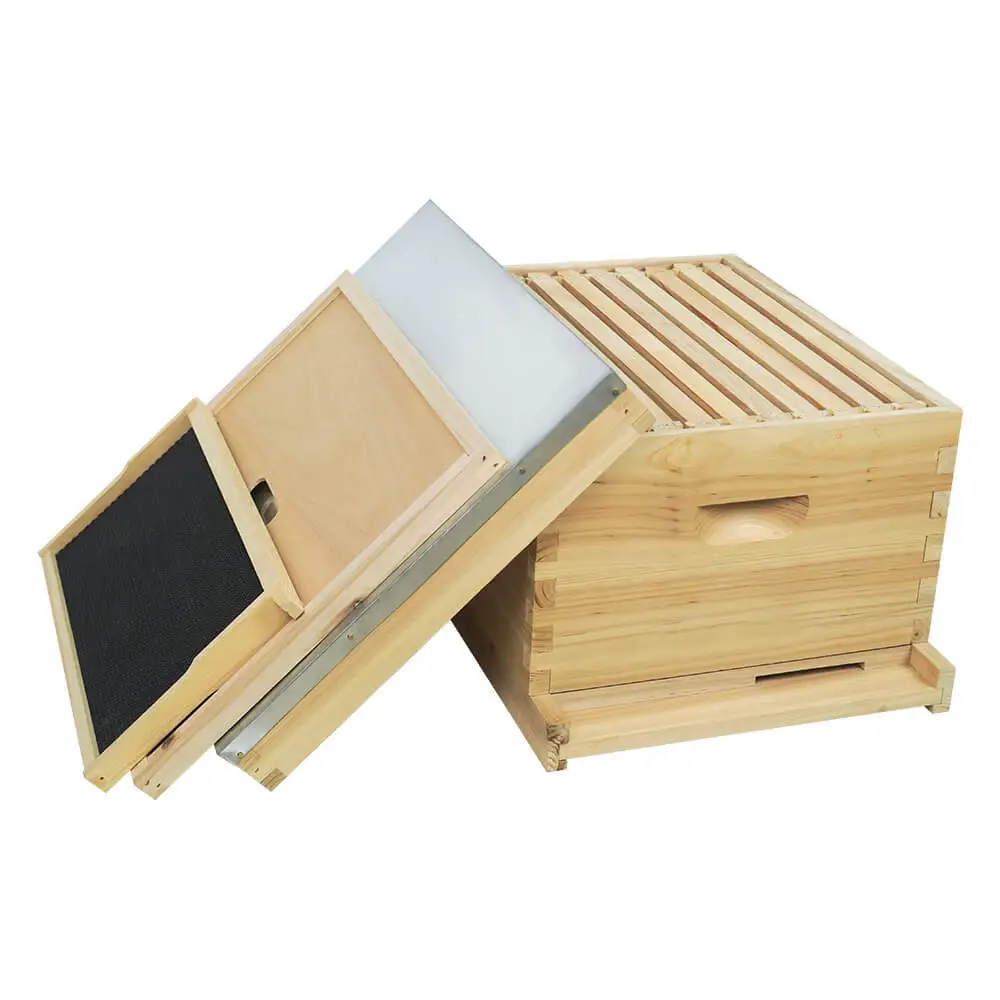
For the hive and frame side, the hive components and kits range covers the volume lines that both hemispheres order, and a standard 8 or 10 frame hive kit ships faster than a bespoke configuration because the machining setup already exists. Extraction capacity belongs in the same order: the honey extractor range has long machining cycles for stainless drums, and queen-rearing consumables from the queen rearing and cage range are low-volume items that are expensive to ship alone.
Order placement checklist
Work through these in order. Each one has a date attached, and the earliest date in the list is the one that decides when the order goes in.
1. Fix the in-use date. The day the equipment has to be working on the apiary, not the day it would be convenient to receive it. For a southern build-up that is late July; for a northern build-up, early March.
2. Subtract door-to-door transit. Use 38–48 days for North Europe and the UK, 18–30 for the US West Coast, 18–25 for Australia, 45–55 for South America.
3. Subtract public holidays. Add two to three weeks if the production window spans Chinese New Year or National Day Golden Week, and avoid shipping in the August–October retail peak where the calendar allows.
4. Get a written production slot. Ask for a confirmed ready date, not an average lead time. Make it a contract term.
5. Finalise the specification before that slot opens. Timber species, moisture content, board grade, steel grade, surface finish, tolerances, packaging and pallet pattern. Changes after this point cost both time and money.
6. Settle the Incoterm. FOB, CIF or DDP, written into the quotation. It decides who books space and who carries transit risk.
7. Order documentation with the goods. ISPM 15 treatment and marking, phytosanitary certificate, chain-of-custody papers where certified timber is specified, certificate of origin, packing list and commercial invoice.
8. Add spares to the same container. Bearings, brakes, straps, lids, feeder parts and mesh. Air-freighting these later costs more than the parts.
9. Reserve the next season’s slot before this one ships. The cheapest capacity is the capacity booked a year out.
Two last checks worth making before the order goes in. Confirm the destination country’s import requirements for wooden hive components in writing, because biosecurity rules change and a container held at the border for retreatment costs more than the goods. And confirm who is responsible for duty and clearance under the chosen Incoterm — the ICC’s Incoterms rules are the reference, and the answer should be in the contract rather than assumed.