
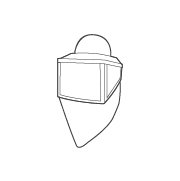
Protective gear is the one line on a beekeeping equipment order that has to fit a person rather than a box. Frames, foundations and extractors are specified once and repeat for years. Suits, jackets and gloves are specified once and then re-specified every time the crew changes, the season changes, or a supplier changes factory. That makes sizing a procurement problem, not a fitting problem.
This is written for operations outfitting a crew of five to fifty, and for distributors who stock protective gear and carry the return risk. The core argument is short: lock the size chart at the contract stage, buy a measurement set rather than a size set, and plan the reorder before the season starts rather than after the first week of it.
Why crew sizing is not retail sizing
A retail customer buys one suit, tries it, and exchanges it if it is wrong. A commercial yard buys forty and cannot try any of them on. The failure mode is not a wrong size, it is a wrong distribution: thirty mediums, five larges and five smalls when the crew actually runs the other way round. The gear arrives, the mediums sit in a store, and the smalls never get worn.
Two things make this worse in beekeeping than in general workwear. First, bee suits are deliberately cut oversized. One published size guide states plainly that garments are designed in slightly baggy styles because they are worn over casual dress or layers, and recommends going one size up if unsure (Beesnhives size guide). So the label on the suit is already not the label on the wearer. Second, seasonal labour means the crew is not the same people next year, and every re-hire restarts the sizing problem.

Published size charts disagree, and the gap is large
There is no industry-wide beekeeping size standard. Each maker publishes its own chart, and the charts do not agree. The table below sets three published charts against each other so you can see the size of the problem.
| Size | Maker A — garment chest, full round (cm) | Maker B — body chest (cm) | Maker B — height band (cm) | Maker C — body chest (cm) | Maker C — height band (cm) |
|---|---|---|---|---|---|
| XS | 117 | not published | not published | not published | not published |
| S | 122 | 90–97 | 168–176 | 100 | 155–165 |
| M | 127 | 98–105 | 174–182 | 108 | 165–170 |
| L | 132 | 106–113 | 180–186 | 116 | 170–175 |
| XL | 137 | 114–121 | 184–188 | 124 | 175–180 |
| 2XL | 142 | 122–128 | 187–192 | 132 | 180–185 |
| 3XL | 147 | not published | not published | 140 | 185–190 |
Read that table carefully, because the difference between Maker A and Maker B at size S is about 25 to 32 cm. It is not an error. Maker A publishes the garment measurement taken flat and doubled, which includes the ease built into the pattern. Maker B publishes the body measurement the garment is cut to fit. Both are correct for their own chart and useless against each other.
Sources: Beesnhives published size guide for beekeeping suits and jackets (garment measure, with a stated tolerance of plus or minus 1.5 to 2.5 cm on after-stitched measurements); Apiprotec UK published sizing guide (body chest and height bands); a China-factory published chart for bee suits (body chest and height bands). Maker names are given as published because the point is the divergence, not the brand.
So the first question to put to any supplier is not “what sizes do you stock” but “is this chart garment measure or body measure, and what is the stated tolerance”. Get it in writing on the quotation. Every sizing dispute I have seen traces back to that one unanswered question.
Measure the crew, then buy the set
Never order from a size list supplied by a crew leader from memory. Take four measurements per person and keep them in a spreadsheet that travels with the order:
- Height (cm) — drives overall length and inseam.
- Chest, full round (cm) — tape under the armpits, over the fullest part.
- Arm, shoulder to wrist (cm) — the measurement that decides sleeve length on a jacket, and the one most often guessed wrong.
- Inseam, crotch to ankle (cm) — decides whether a coverall drags or rides up.
Published suit charts run in roughly 4 cm steps on length, 5 cm on chest, 1.25 cm on arm and 3 cm on inseam between adjacent sizes (Beesnhives). Those steps tell you something useful: because the increments are small relative to human variation, a crew of twenty will normally spread across four sizes, not seven. Buy the sizes you measured and add a defined number of float garments.
Then decide the float. A float suit is a garment held unissued so that a torn suit can be swapped mid-season without anyone working unprotected. How many you need depends on crew turnover, laundering turnaround and how rough the work is — there is no published figure for beekeeping crews, so set it from your own loss rate and state it as a policy rather than a guess.
Gloves are the item that fails first
Gloves turn over faster than any other item of beekeeping PPE. They take the abrasion from hive tools, frames and box edges, they get contaminated with honey and propolis, and they are the item most likely to be borrowed, lost or left in a truck.
Published replacement guidance for general work gloves puts heavy-use replacement at weekly to monthly, moderate use at one to three months, and light use at three to six months, with replacement triggered by holes, stiffness, thinning coating or loss of grip (eSafetySupplies PPE replacement checklist). For agriculture and outdoor trades, a full-time operative accumulates roughly 250 wear cycles a year, and published workwear replacement cycles for the sector run 12 to 18 months on UV, chemical and abrasion exposure grounds (EssentialWorkwear).
Plan glove volume from cycles per person per season, not from headcount. A crew member who works colonies five days a week through a flow will consume several pairs; one who inspects weekly will not. Sizing matters here too, and it is worth stocking two lengths of gauntlet. Extra-long canvas sleeves suit crews working deep boxes or tall stacks, while short-cuff leather suits quick inspections and warm weather. Our premium yellow sheepskin beekeeping gloves and the ventilated goatskin gloves with extra-long sleeves cover the two ends of that range, and the full range sits under beekeeper protective gear.
On certification, ask a direct question: is the glove CE marked as personal protective equipment, or is it sold as a general work glove? The European framework for protective gloves is Regulation (EU) 2016/425, with EN ISO 21420:2020 setting general requirements including sizing, dexterity and harmlessness of materials, and EN 388:2016+A1:2018 setting mechanical performance levels for abrasion, blade cut, tear, puncture, ISO 13997 cut and optional impact protection, as set out in the SGS testing overview for protective gloves against mechanical risks (2023). EN 388 gloves are Category II PPE and need EU type examination by a notified body. The older EN 388:2003 version has been withdrawn, so a certificate quoting it is out of date. A beekeeping glove certified to that framework will say so on the marking; one that does not is a work glove, and should not be presented to a safety officer as PPE.

Reorder triggers worth writing into a policy
Reactive replacement is more expensive than scheduled replacement, and it shows up as emergency freight and crews working in damaged gear. The table below converts published PPE guidance into a form you can paste into a yard policy.
| Item | Retire it when | Inspection rhythm | Notes for a bee yard |
|---|---|---|---|
| Gloves | Holes, thinning, stiffness, contamination, lost grip | Before each use | Highest turnover item; buy per season, not per head |
| Suit / coverall fabric | Thinning at knees, elbows and crotch seam; tears; broken zips | Formal check every 6 months | Propolis and honey stiffen fabric and hide small tears |
| Veil mesh | Mesh kinked, torn, or no longer holding shape away from the face | Before each use | Mesh that touches skin is mesh that does not protect |
| Zips and closures | Any zip that will not close fully, or a pull that separates | Before each use | The neck zip is the commonest entry point for a bee |
| Boot bands / ankle closures | Elastic lost, hook tape worn, band no longer seals | Monthly | Cheap item, high consequence; keep spares in every truck |
| Whole garment — regulatory | Certification cannot be verified, or garment exceeds maker’s stated service life | At each scheduled review | Under UK and EU PPE duties the employer must keep PPE effective |
The regulatory line matters. UK guidance on personal protective equipment at work puts the duty on the employer to keep PPE effective, and general OSHA guidance requires PPE to be maintained in a sanitary and reliable condition, with defective or damaged PPE not used (eSafetySupplies; HSE PPE at work duties). Washing regime counts: published beekeeping guidance recommends machine washing suits at 30 to 40 degrees Celsius, and hand washing veils and gloves with fragrance-free soap so that residual scent does not provoke the colony (Apiprotec garment care guidance). Industrial laundering at 60 degrees Celsius and above shortens fabric life materially, so a yard that hot-washes suits will replace them sooner than one that does not.
Ankle closure is worth a separate line in the order. Bees climb. A suit with a good zip and an open cuff is a suit with a hole at the bottom, and the fix costs very little. Beekeeping boot bands are cheap enough to issue one pair per crew member plus spares, and they remove the single most common avoidable sting site.
Ordering windows, north and south
Gear should land before the season that wears it out, and that means two different calendars.
Northern hemisphere (North America, Europe, UK): the working season runs roughly April to September. Order in the preceding autumn — October to December — so that production, printing or embroidery, and freight clear before the first flow. November is the month to place the order, not to receive it. Sizing data should be collected in September while the season’s crew is still on the payroll; by January the crew list has changed.
Southern hemisphere (Australia, New Zealand, Chile, Argentina, South Africa): the season runs roughly September to March, so the order window is April to June. A November delivery in the southern hemisphere arrives mid-season, when the gear that is failing is already failing. Distributors serving both hemispheres should hold stock continuously rather than trying to time two windows from one factory slot.
Scale the order against the market before against your own crew, particularly if you are a distributor rather than an operator. Colony counts and honey output by country are published in the FAO pollination and pollinator resources, United States colony and honey figures come from USDA NASS bee and honey surveys, and North American colony loss and management data is collected through the Apiary Inspectors of America national survey. Those three sources tell you how many people are working colonies in a market and therefore how large the replacement market is.
Freight planning is simple arithmetic once the carton is known. Published bulk packing for bee suits runs at about 25 pieces per carton in a 43 by 43 by 61 cm carton, with a published minimum order quantity of 200 pieces and a published lead time of seven days after prepayment for stocked items (Super-Sweet supplier listing). Confirm the carton and the MOQ for your own specification before you cost the freight — both vary by garment weight and by whether logos are applied.
Fleet sizing and reorder checklist
Work through this before the order goes out, and keep the completed version on file so next year’s reorder is a revision rather than a restart.
- Get the chart in writing. Ask whether it is garment measure or body measure, and the stated tolerance in centimetres.
- Confirm the size range. XS to 3XL is common; 4XL and 5XL are usually a custom run with a higher MOQ, so flag it early.
- Measure every crew member. Height, chest full round, arm shoulder-to-wrist, inseam. Four numbers, one spreadsheet.
- Convert with the supplier’s chart, not your own. Send the measurements and let the factory map them; you keep the measurement record as the fallback if a dispute arises.
- Add the float. Unissued spare suits and jackets sized across the middle of your range, set from your own loss rate.
- Split gloves from suits. Order gloves on cycles per person per season; order suits on headcount.
- Specify the fabric by number. Basis weight in grams per square metre, and any test standard you need the fabric to meet. Published beekeeping fabric specifications include a 300 g/m² serge cotton meeting EN ISO 13934-1 tensile strength of at least 800 N and EN ISO 13937-2 tear resistance of at least 15 N (Apiprotec).
- Check the certification claim. PPE or work glove. If PPE, get the standard numbers and the notified body.
- Order the small parts. Boot bands, spare zips, spare veils. They are the items that stop a suit mid-season.
- Set the reorder date now. Put the mid-season reorder on the calendar at the same time as the main order, with the quantity estimated from measured glove use in the first month.