
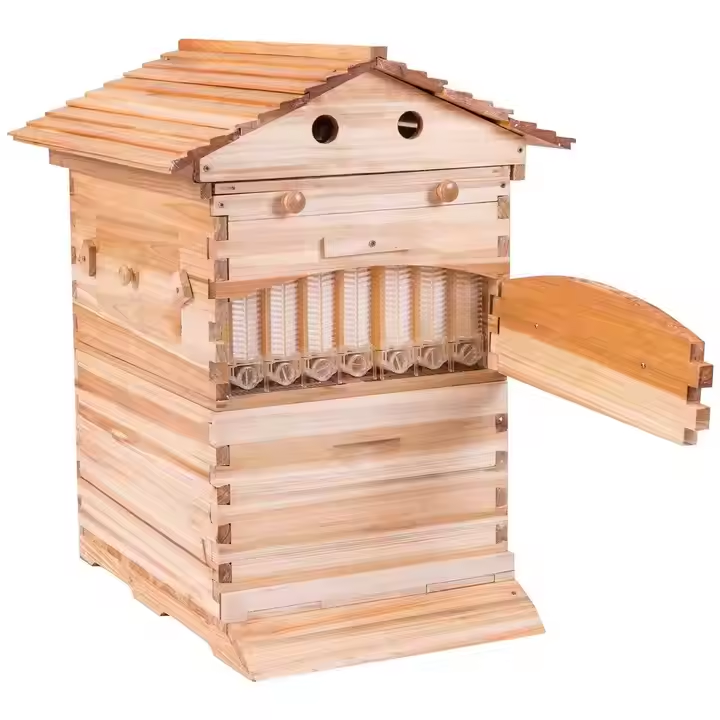
A frame standard is not a preference. It is the specification every other purchase is measured against. Boxes, foundation sheets, queen excluders, feeders, extractor baskets, uncapping stands, transport pallets and the spare lid you keep in the truck all follow from one number: the length of the top bar and the depth of the side bar. Choose once, badly, and you carry the error for a decade.
This is written for operations running several hundred to several thousand colonies and for the distributors who stock them. If you buy 200 frames a year, a mismatch is an annoyance. If you buy 200 pallets, a mismatch is a warehouse problem, a cash problem and a customer-returns problem at the same time.
The three standards that matter in export trade are Langstroth, Dadant (including the continental Dadant-Blatt) and the British Standard National. They are not interchangeable, they do not nest inside one another, and the differences are large enough that no amount of shimming fixes them. Below is what each one measures, where each is used, and what a fleet pays for holding more than one.
The three standards, and where each one is the default
Langstroth
Langstroth is the default across North America and the widest-distributed standard worldwide. It is the format most export factories tool for first, and the one with the deepest aftermarket: excluders, feeders, extractors and foundation are catalogued against it almost everywhere. For a distributor this means the shortest path to a full shelf.
The frame is long and comparatively shallow. A deep Langstroth frame gives roughly 61,000 worker cells per brood box, which is why many commercial operations run two deeps or a deep plus a medium rather than a single brood chamber (East Devon Beekeepers, hive data table).
Depth variants are the strength of the system. Deep, medium (Illinois) and shallow share the same top bar length, so boxes of different depth stack and swap freely. That single fact is what makes the Langstroth rig modular, and it is the main reason it displaced most regional standards in migratory operations.
Dadant and Dadant-Blatt
Dadant is really two related standards that get confused constantly in export enquiries. The US Modified Dadant uses a brood frame of about 448 mm by 285 mm, eleven frames to the brood box, and roughly 93,000 brood cells (East Devon Beekeepers). The continental Dadant-Blatt uses a 470 mm top bar with a working comb area of 435 mm by 300 mm and a 145 mm super (Apicoltura Laterza, 2025; BeeEquipment EU product specification). They are different sizes. A purchase order that says only “Dadant” will be filled wrongly about half the time.
Dadant-Blatt is the working standard in France, Italy and much of central and eastern Europe, and it is what most European-built extractors, feeders and foundation rolls are cut for. If your customer base is continental European, Dadant-Blatt is the specification to quote, not US Dadant.

British Standard National
The National is a square hive: external footprint 460 mm by 460 mm, brood box 225 mm high, super 149 mm high, and eleven frames plus a dummy board in the brood chamber (Dorchester & Weymouth Beekeepers’ Association, hive sizes page). Its top bar is 432 mm, noticeably shorter than Langstroth, and it carries long lugs that overhang the rebate and act as hand holds.
The square footprint is the point. Because the box is square, frames can be run parallel to the entrance (“warm way”) or at right angles to it (“cold way”), which gives a UK beekeeper seasonal control a rectangular Langstroth box cannot offer. The trade-off is capacity: the standard National brood box holds about 60,000 cells against roughly 61,000 for a Langstroth deep and 93,000 for a Dadant brood chamber. The common UK answer is the 14 x 12, a deep National brood box on a 305 mm frame with about 93,500 cells, which stays compatible with National supers.
Key frame dimensions in millimetres
The table below gives the figures a buyer should put on a purchase order. Every number is a nominal value; production tolerances of plus or minus 2 to 3 mm between makers are normal and remain compatible, but a top bar that is 10 mm out will not seat in the rebate.
| Dimension (mm) | Langstroth deep | Langstroth medium | Dadant-Blatt (EU) | US Modified Dadant | BS National deep (DN4) | BS National super (SN4) |
|---|---|---|---|---|---|---|
| Top bar length with ears | 482–483 | 482–483 | 470 | 482 | 432 | 432 |
| Top bar width | 22–27 | 22–27 | 25 | varies by maker | 22 | 22 |
| Frame body width (excl. top bar) | 448 | 448 | 435 | 448 | 356 (bottom bar) | 356 (bottom bar) |
| Frame height | 232 | 159 | 300 | 285 | 215–216 | 140 |
| Side bar width at shoulder | 35 | 35 | 37 (Hoffman) tapering to 25 | 35 | 35 (Hoffman) | 35 (Hoffman) |
| Lug / ear length | 16–22 (short lug) | 16–22 (short lug) | approx. 10 (hanger) | 16 (5/8 in) | approx. 38 (long lug) | approx. 38 (long lug) |
| Brood frame centre-to-centre spacing (mm) | 35 | 35 | 37–38 | 38 | 35 (Hoffman self-spacing) | 35 (Hoffman self-spacing) |
| Bee space to box wall (mm) | 6.35–9.53 | 6.35–9.53 | 7–9 | 6.35–9.53 | 6.35–9.53 | 6.35–9.53 |
Sources for the figures: FAO beekeeping equipment chapter for the 482 mm top bar and 10-frame box dimensions; Dorchester & Weymouth BKA and WoodenShell published frame specifications for the National; BeeEquipment EU and Apicoltura Laterza for Dadant-Blatt; East Devon Beekeepers for the US Dadant frame count and spacing. Where two sources disagree, the range is shown rather than a single number.
Two entries in that table deserve a warning. Lug length is the least standardised dimension in the whole system: published figures for a Langstroth lug range from 5/8 in (16 mm) to 7/8 in (22 mm) depending on whose catalogue you read, and National lugs are commonly quoted near 38 mm. If a customer is re-using existing boxes, ask for a measured lug and rebate depth before tooling, not a catalogue name.
Bee space: the tolerance that governs everything else
Bee space is the gap a colony will leave alone. Below roughly 7 mm bees fill the gap with propolis; above roughly 9 mm they build brace comb across it (Apicoltura Laterza, 2025). Inside that narrow window the frame stays free, which is the whole basis of a movable-frame hive.
The historical figures are worth knowing because they explain where the modern numbers came from. Langstroth’s 1852 patent adopted 3/8 in (9.53 mm) between the side bars of a frame and the hive wall, and the accepted bee space range is quoted as 1/4 in to 3/8 in, 6.35 mm to 9.53 mm (Langstroth hive, historical summary). Dzierzon’s earlier work set comb centre-to-centre spacing at 1 1/2 in (38.1 mm), which leaves 1/2 in (12.7 mm) between combs — exactly two bee spaces, because bees work back to back on adjacent frames.
Practical consequence for a buyer: frame-to-wall clearance is more forgiving than comb spacing. A box cut 2 mm generous gets propolised but still works. A frame whose Hoffman shoulders are cut 2 mm narrow changes comb pitch across the whole box, and the colony responds by drawing brace comb between frames. That is a manufacturing defect you find at the first honey flow, not at goods-in.
Frame spacing in a brood chamber is normally 35 mm centre to centre on Langstroth and National, and 38 mm on Dadant (East Devon Beekeepers). Supers are looser: many operators space wider to let bees draw deeper comb for extraction, and castellated spacers make that adjustable. Specify which spacing your frames are built for, because self-spacing Hoffman side bars fix the pitch permanently and you cannot change it later.
Box dimensions and how many frames actually fit
Frame count is not simply box width divided by frame pitch. It is set by the internal length available after the rebate, and it changes with the operator’s preference once you move past ten frames. The table gives the working figures.
| Configuration | Internal length (mm) | Internal width (mm) | Box depth (mm) | Frames normally run | Approx. brood cells |
|---|---|---|---|---|---|
| Langstroth 10-frame deep | 470 | 370 | 240 | 10 | 61,000 |
| Langstroth 10-frame medium | 470 | 370 | 170 | 10 | super, not brood |
| Langstroth 10-frame shallow | 470 | 370 | 144 | 10 | super, not brood |
| Langstroth 8-frame deep | 470 | 310 | 240 | 8 | proportional to 10-frame |
| Dadant-Blatt brood | 470 (footprint) | — | 300 | 10 | 93,000–93,500 |
| Dadant-Blatt super (1/2) | 470 (footprint) | — | 145 | 9 | super, not brood |
| BS National brood | 460 (external) | 460 (external) | 225 | 11 + dummy board | 60,000 |
| BS National super | 460 (external) | 460 (external) | 149 | 9–10 on castellated spacers | super, not brood |
| BS Deep National (14 x 12) | 460 (external) | 460 (external) | 315 | 11 + dummy board | 93,500 |
Internal volume follows directly. A 10-frame Langstroth deep measures about 42.75 litres internally, an 8-frame deep about 35.50 litres, and a 10-frame medium about 29.42 litres (Langstroth hive dimensional tables). Use those figures when you are working out how much winter feed a configuration actually holds, not the box height alone.
Note the frame-count trap on the National. Eleven frames plus a dummy board is the working configuration; twelve will physically fit but leaves no room to pry the first frame out, and anyone who has tried it stops doing it. On castellated spacers a National super runs nine or ten, and eight with wide-end frames.
Matching frames to foundation
Foundation is cut to the frame, so a frame standard dictates a foundation standard. This is where mixed fleets quietly get expensive.
A Langstroth deep sheet is cut for a 448 mm by 232 mm frame. A Dadant-Blatt sheet is cut for 435 mm by 300 mm. A National deep sheet is cut for a frame of about 356 mm clear width and 215 mm depth. None of these can be trimmed down into another without leaving an unsupported gap at the bottom bar, and a sheet that does not reach the bottom bar gets drawn as drone comb below the wax.
Three checks before you confirm a foundation order:
- Sheet height versus frame depth. Wax foundation should sit close to the bottom bar with a small clearance; too short and bees draw wild comb underneath.
- Sheet width versus clear frame width. Measure inside the side bars, not the top bar length.
- Wire and eyelet layout. Vertical wiring positions must line up with the holes your frame mill drills. Mismatched wire holes mean hand-threading on site, which is the labour cost nobody budgeted for.
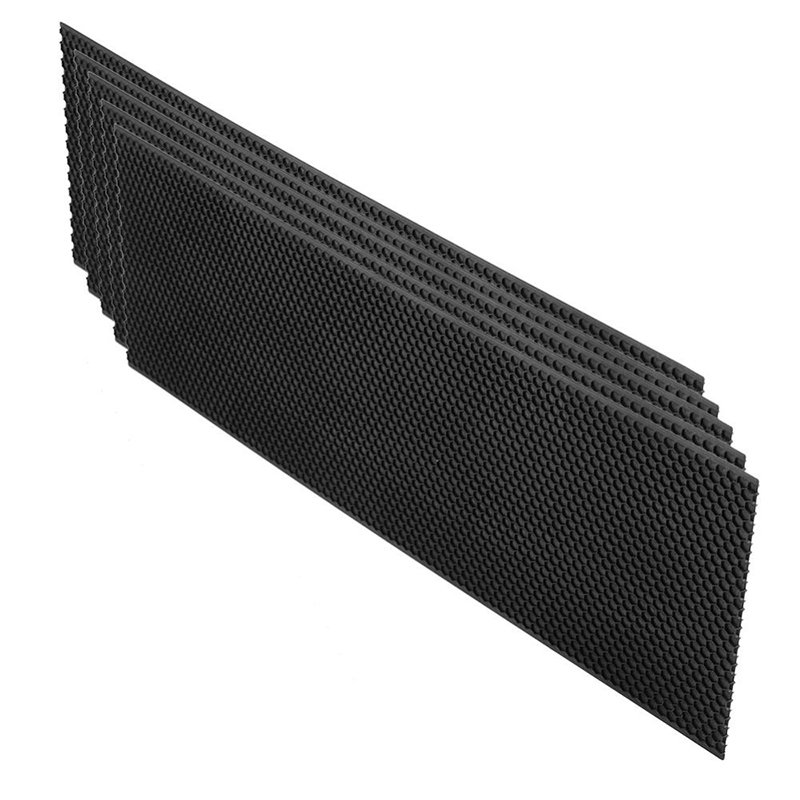
Plastic foundation removes the wiring problem but introduces a dimensional one: plastic sheets are moulded to a specific frame, and a Dadant-Blatt moulding will not seat in a Langstroth frame. If you supply both, you are holding two moulding tools’ worth of stock. Our range of full-depth plastic foundation sheet for Dadant hives and the corresponding Langstroth-depth sheets exist as separate SKUs for exactly this reason.
Buyers who want the frame and sheet matched at the factory rather than on the assembly bench should look at premium wooden beehive frames supplied with foundation cut to the same jig, and at the wider frame and beeswax foundation range, where sheet depth is listed against frame depth on every line.
What a mixed fleet actually costs you
Running two or three standards is not a lifestyle choice. It multiplies line items, and the multiplier lands in five places at once.
Spare parts. A frame is the highest-turnover consumable on a commercial yard and the most breakable. Holding three standards means three stock levels, three reorder points and three chances to run out during a flow.
Inventory SKUs. Every depth variant multiplies by every standard. Three depths across three standards is nine frame lines against three. Foundation follows the same arithmetic, and so do boxes.
Extractor compatibility. Basket geometry follows frame height. A radial basket cut for a 232 mm Langstroth deep will not hold a 300 mm Dadant-Blatt frame without modification, and a machine set up for one sits idle while the other runs. This is the single hardest cost to reverse, because extractors are capital items.
Compatibility risk on changeover. The failure mode is specific and it happens every spring: a super from one standard is placed on a brood box from another because both are in the truck. It does not seat, the gap becomes a bee highway, and the crew loses the afternoon. Lids, crown boards and floors carry the same risk.
Resale and consolidation. When an operation sells down or merges yards, the standard with the deepest local aftermarket is the one that moves. Mixed fleets discount as separate lots.
The counter-argument is real but narrow. A distributor selling into two adjacent markets may genuinely need two standards to serve two customer bases. That is a commercial decision to take deliberately, with the SKU cost counted, not a drift that happens because three different purchase orders were placed over four years.

Regional defaults and what buyers actually order
Where the equipment lands should drive the specification, and the pattern is stable enough to plan against:
- North America, Australia, New Zealand, much of Asia: Langstroth, with 8-frame or 10-frame depending on whether the operation lifts by hand or by machine.
- France, Italy, Spain, Poland and much of central and eastern Europe: Dadant-Blatt. Confirm the 470 mm top bar, not the US 482 mm.
- United Kingdom and Ireland: British Standard National, with the 14 x 12 deep National common where a larger brood chamber is wanted.
- Germany and Austria: regional standards including Zander and Deutsch Normalmass are still strongly represented; ask before assuming Dadant-Blatt.
- Development-project and tender procurement: usually Langstroth, because donor-funded supply chains and training material are built around it.
For bulk Langstroth supply, our Langstroth beehives in bulk quantities are built to the 10-frame internal dimensions above, with the rebate cut to accept either short-lug frames or the longer-lug variants if your market uses them. Say which lug depth you need on the enquiry; it is the one dimension we cannot infer from a standard name.
Production statistics are worth a look when you are sizing a first order. Colony counts and honey output by country are published by the FAO FAOSTAT live animal and honey datasets, and United States colony and honey figures come from USDA NASS bee and honey surveys. Colony-loss and management survey data for North America is collected by the Apiary Inspectors of America national survey. None of these set a frame standard, but they tell you how much equipment a market absorbs.
What to write on the purchase order instead of a standard name
Most compatibility disputes start with a three-word specification. “Langstroth deep frames” tells a mill the family but not the fit, and two factories reading the same words will produce frames that differ by more than a colony will tolerate. Put dimensions on the order and the argument disappears.
A frame line on a purchase order should carry six numbers: top bar length including ears, top bar width, top bar thickness, frame height measured over the side bars, side bar width at the Hoffman shoulder, and lug depth measured from the underside of the top bar to the bottom of the ear. Add the box rebate depth the frames have to sit in, and the spacing you want the Hoffman shoulders to set. That is the full geometry, and it is eight numbers on one line.
Then specify the two things buyers forget. First, tolerances: state the acceptable band, normally plus or minus 2 mm on frame height and plus or minus 1 mm on top bar length for export-grade work, and say whether the measurement is taken on finished, assembled frames or on cut parts. Second, moisture content and timber species. Frames machined from timber above roughly 18% moisture will move after they reach a dry warehouse, and a top bar that cups by 3mm changes the bee space above the frame. Pine and cedar behave differently in the same container.
Ask for a first-article sample before the container ships, and measure it against the box, not against the drawing. A frame that matches its own drawing and still will not seat in the rebate is the most common single defect in exported frame consignments, and it is only visible when frame and box are put together.
Eight-frame or ten-frame, and why it is a lifting decision
Within Langstroth, the 8-frame versus 10-frame question is not about bee biology. It is about what lifts the box. A 10-frame deep full of honey is a two-person or mechanical lift; an 8-frame deep is roughly a third lighter and one person can manage it. Operations without a loader, and operations with an ageing crew, often run 8-frame for that reason alone.
The cost side runs the other way. Eight-frame equipment needs more boxes, more lids and more floors to hold the same comb area, so the per-colony hardware count goes up even though each box is cheaper. It also fragments stock: an 8-frame super will not sit square on a 10-frame brood box, and the overhang leaves a gap. If you standardise on 8-frame, standardise the whole stack, including the extractor basket.
When to change standard, in both hemispheres
Standardisation is a project, and it has a right season. Frames are drawn and fixed with brace comb once a flow starts, so the swap window sits before the build-up, not during it.
Northern hemisphere (North America, Europe, UK): the working window is late winter into early spring, roughly February to April depending on latitude, before the first strong flow. Colonies are at their lowest adult population, stores are at their smallest, and there are fewer drawn frames to transfer. In practice the ordering decision is made the previous autumn — October to December — so that containers land before the window opens. November is the month to specify, not to receive.
Southern hemisphere (Australia, New Zealand, Chile, Argentina, South Africa): the equivalent window is mid-winter to early spring, roughly July to September, again ahead of build-up. Ordering runs March to May. A November delivery in the southern hemisphere lands in the middle of swarm control and queen rearing, which is the worst possible moment to be re-boxing.
The transfer method matters more than the date. The low-risk sequence is: run the new boxes on the existing stands, move drawn brood comb across frame by frame, and feed through the change. Re-boxing a colony onto bare foundation in a cold week is how a standardisation project loses colonies.
What the standard decision costs, line by line
The table below puts the fleet-level cost on one page. The SKU counts are arithmetic — one standard means one line per depth, three standards means three lines per depth. Unit prices are deliberately not filled in: they vary by timber species, quantity, finish and freight term, and any single figure printed here would be wrong for most readers. Ask for a quoted breakdown against your own quantity.
| Cost line | One standard across the fleet | Three standards across the fleet | What moves the number |
|---|---|---|---|
| Frame lines held (3 depths) | 3 SKUs | 9 SKUs | Each depth multiplies by each standard |
| Foundation lines held | 3 SKUs | 9 SKUs | Sheets are cut to frame width and depth |
| Box lines held | 3 SKUs | 9 SKUs | Rebate follows top bar length and lug depth |
| Lids, floors, crown boards | Interchangeable across the fleet | Not interchangeable | Box footprint differs by standard |
| Extractor basket geometry | One setup | Three setups, or one machine idle | Cage depth follows frame height |
| Spare-part stock value | Lower, one reorder point per line | Higher, three reorder points per line | Safety stock scales with line count |
| Crew training time | One frame rhythm | Three frame rhythms | Seasonal labour turnover repeats the cost every year |
| Changeover error risk | Low | High, mainly at the brood-super joint | Mixed standards in one truck on one day |
| Resale value on consolidation | One lot, deeper local aftermarket | Three lots, thinner demand each | Local aftermarket depth per standard |
| Unit price | Varies by timber, quantity, finish and Incoterm — request a measured quote for your specification and volume | ||
Read that table as a decision tool rather than a verdict. If your market genuinely spans two standards, the extra SKUs are the cost of access to both customers. What the table is really arguing is narrower: pick the standard deliberately, write it into the purchase order as a dimension rather than a name, and hold it. Most mixed fleets were not chosen. They accumulated.