
A quote that says “FOB Ningbo” and a quote that says “DDP Chicago” can differ by more than the freight line on the invoice. One of them leaves you arranging a vessel, insuring a container and clearing a border. The other leaves you waiting at a warehouse door. For beekeeping equipment, where a 40-foot container of hive bodies is worth far less per cubic metre than the same container of electronics, the choice of delivery term decides who carries which risk and how much of your landed cost is under your control.
This is written for distributors and commercial buyers importing equipment from a Chinese factory. It covers the three terms that come up most often in enquiries, FOB, CIF and DDP, what each one actually transfers, and where the cost lands.
What an Incoterm does, and what it does not
Incoterms are the 11 standard trade terms published by the International Chamber of Commerce. The current set is Incoterms 2020, in force since 1 January 2020. They are not law. They are contractual terms that bind the two parties once they are written into a sales contract, which is why the contract should name the version: “FOB Ningbo, Incoterms 2020” rather than “FOB”.
Each rule sets three things: who delivers what to whom and where, where the risk of loss or damage moves from seller to buyer, and who pays each cost along the way. Those three do not always move at the same point, and that is where most disputes start.
Four rules apply only to sea and inland waterway transport: FAS, FOB, CFR and CIF. Seven work with any mode, including road, rail, air and multimodal: EXW, FCA, CPT, CIP, DAP, DPU and DDP. Using a sea-only rule for an air shipment is a technical error that creates argument at the worst moment.
Two things an Incoterm never does: it does not transfer ownership, and it does not set payment terms. Title and payment belong elsewhere in the contract.
FOB: the sea default, with a container problem
Under FOB the seller clears export and delivers the goods on board the vessel at the named port. Risk moves at that moment. From then on the buyer pays ocean freight, marine insurance, destination charges, import clearance, duty and inland delivery, and carries the risk of everything that happens in between.
FOB suits a buyer with their own forwarder and a freight rate they negotiated themselves. You choose the carrier, you see the actual freight cost, and you know which vessel your goods are on. For a repeat importer shipping full containers several times a year, that control is worth having.
The difficulty is containers. Between the goods leaving the factory and the box being loaded on the vessel, the container sits in a terminal. Under FOB the seller still carries the risk during that period, but has no physical control of the goods, and if something happens in the yard the claim runs against a party that did not cause it. That gap is the standing argument for using FCA with the on-board bill of lading option that Incoterms 2020 added, rather than FOB, when the cargo is containerised.
CIF: freight and insurance paid, risk still at origin
CIF looks like a step up because the seller pays the ocean freight and arranges insurance. It is, and it is not. The risk still transfers when the goods are on board at the port of loading, the same point as FOB. The seller has paid for the transport; you still own the risk during it.
That distinction is not academic. If a container is lost overboard, the loss is yours under CIF. You claim against a policy the seller bought for your benefit, at the minimum level the rule requires.
What CIF insurance actually covers
Only two of the eleven rules require the seller to buy insurance: CIF and CIP. Under CIF the minimum is Institute Cargo Clauses (C), and the cover must be at least 110% of the value. Under CIP, Incoterms 2020 raised the floor to Clauses (A), the all-risks wording.
Clauses (C) is a named-perils cover. It responds to fire or explosion, the vessel being stranded, grounded, sunk or capsized, overturning or derailment of the land conveyance, collision with an external object other than water, discharge of cargo at a port of distress, general average sacrifice, and jettison. It does not respond to theft, pilferage, freshwater or condensation damage, breakage, contamination or handling damage.
For beekeeping equipment that list of exclusions is the relevant part. Glass honey jars break. Steel extractors get dented and scratched in handling. Wooden hive components take water damage in a wet container. None of those are covered by the minimum CIF policy. If you import under CIF, either ask the seller to place Clauses (A) cover and pay the premium difference, or buy a top-up policy in your own market. Under the other nine rules nobody is obliged to insure anything, and assuming the other party did is the single most expensive mistake in this area.
DDP: the all-in price, and what you give up for it
DDP puts everything on the seller: export clearance, main carriage, import clearance, duty, taxes and delivery at the named place in your country. It is the only rule of the eleven where the seller pays import duty. You unload.
For a first container, or for a buyer without an importer-of-record structure, DDP removes the part of the process that is hardest to learn. The price is higher, because the seller is pricing risk they cannot control, and it is a single number that hides the freight, duty and clearance components.
The trade-off is control. You do not choose the carrier, you do not see the duty calculation, and a clearance problem at your end still stops the delivery. DDP also assumes the seller can lawfully act as importer in your country, which not every factory can do directly.
Risk, insurance and suitability by term
| Term | Risk transfers to buyer | Insurance obligation | Minimum cover | Container shipments |
|---|---|---|---|---|
| FOB | On board vessel at port of loading | Buyer’s choice, not required | None set by the rule | Usable, with a risk gap in the terminal; FCA preferred |
| CIF | On board vessel at port of loading | Seller must insure | Institute Cargo Clauses (C), 110% of value | Same gap as FOB; cover excludes breakage and theft |
| DDP | At the named place in the buyer’s country | Not specified by the rule; seller bears the risk | Negotiated | Workable where the seller can clear imports |
| FCA | On handing to the carrier at the named place | Buyer’s choice, not required | None set by the rule | Recommended; on-board bill of lading available under Incoterms 2020 |
| CIP | On handing to the first carrier | Seller must insure | Institute Cargo Clauses (A), all risks, 110% of value | Recommended where the seller arranges freight |

Which term fits which equipment
Equipment profile matters more than company policy. Freight is charged on volume and weight, so what is in the container changes which term is sensible.
| Equipment | Cost character | Term that usually fits | Reason |
|---|---|---|---|
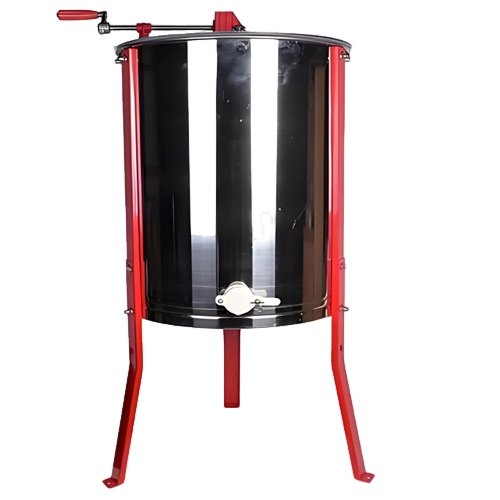
| Stainless extractors and tanks | High unit value, heavy, dent and scratch easily | FOB or CIP with Clauses (A) cover | Value justifies your own freight negotiation and full cover |
| Hive bodies, frames and kits | Low value per cubic metre; volume-driven | FOB with your own forwarder, or CIF | Freight is a large share of landed cost; see the real number |
| Glass jars and bottles | Heavy, fragile, breakage-prone | CIP, or FOB with your own all-risks policy | Clauses (C) excludes breakage, which is the main risk |
| Protective gear and small tools | High value per cubic metre, low damage risk | DDP for small or first orders; FOB once volumes repeat | Freight is a small share; convenience wins at low volume |
Consolidating several lines into one container changes the answer again. A mixed container of extractors, hive components and jars has the cost character of its bulkiest line and the damage profile of its most fragile one, so it should be specified as one shipment rather than quoted line by line.
Duty, classification and who pays it
The Incoterm never changes the duty rate. Classification does. Duty is calculated on the HS classification of the goods in the destination market, and for the US the starting point is the Harmonized Tariff Schedule. Under FOB and CIF the buyer pays it; under DDP the seller does, and prices it into the quote. Either way, somebody has to classify the goods correctly, and a wrong classification is the buyer’s problem even under DDP.
US import formalities sit with the importer of record, and CBP’s basic import and export guidance is the reference for what that entails. Wooden hive components and wooden pallets bring their own requirement: wood packaging material generally has to meet ISPM 15 treatment and marking before it will be accepted.

Timing the order against the season
Equipment is bought months before it is used, and the two hemispheres run opposite calendars. In the northern hemisphere, commercial operators order in the fourth quarter for delivery before the spring build-up, so containers should be booked with enough margin for production and a sailing schedule that is tightest around the new year.
In the southern hemisphere the buying peak moves by six months: Australian, New Zealand, Chilean and Argentine operators need equipment landed before their spring, roughly September onwards, which puts the order and the booking in the first and second quarter. A distributor serving both should hold one rolling container plan rather than two ad hoc ones, and should agree the delivery term once rather than renegotiating it per shipment.
Landed cost by delivery term
The table below sets out where each cost element falls under the three common terms. Exactly what each line costs varies by route, carrier, season and container type, so treat the split as the fixed part and the amounts as the part you have to price for your own lane.
| Cost element | FOB | CIF | DDP |
|---|---|---|---|
| Export packing and inland haulage to port | Seller | Seller | Seller |
| Export clearance and documentation | Seller | Seller | Seller |
| Terminal handling and loading on vessel | Seller | Seller | Seller |
| Ocean freight to destination port | Buyer | Seller | Seller |
| Marine insurance, minimum cover | Buyer | Seller, Clauses (C) floor | Seller |
| Extended all-risks cover | Buyer | Buyer, unless negotiated | Negotiated |
| Destination terminal and unloading | Buyer | Buyer | Seller |
| Import clearance and entry filing | Buyer | Buyer | Seller |
| Import duty and taxes | Buyer | Buyer | Seller |
| Inland delivery to your warehouse | Buyer | Buyer | Seller |
| Unloading at your premises | Buyer | Buyer | Buyer, unless agreed otherwise |
Read across a row and the pattern is clear. FOB gives you the largest workload and the most control. CIF moves the freight and the minimum insurance to the seller and leaves everything after the destination port with you. DDP moves the whole chain, and the price reflects it.
Points to fix before the quote is accepted
- Name the place precisely. “FOB Ningbo” beats “FOB China”; “DDP your warehouse address” beats “DDP USA”.
- Cite the version. “Incoterms 2020” removes any argument about which edition applies.
- State the container type and count. A 20-foot and a 40-foot high-cube container have different freight economics, and the quote should say which one it assumes.
- Allocate the destination charges. Terminal handling, demurrage and detention are the most contested costs at the port, and the term does not automatically settle them.
- Name the insurance level. If Clauses (A) cover is what you need, write it in rather than discovering the floor after a claim.
- Confirm who is importer of record. Under DDP in particular, confirm the seller can lawfully act in your market.
- Specify packing and palletisation. Damage claims fail on insufficient packing whatever the insurance level, and export carton specification is part of the purchase.
- Keep payment terms separate. The Incoterm does not say anything about deposits, balances or letters of credit.
Enzher quotes FOB, CIF and DDP on the same equipment and will price the same container under two terms so the difference is visible before you choose. Heavy and bulky lines are the ones where the term matters most: the honey extractor range and stainless equipment such as the 2 to 24 frame 304 stainless extractors carry high value in few cartons, while Langstroth hives in bulk quantities and the glass jar range are freight- and breakage-driven respectively. Mixed containers of these lines are the normal case for a distributor, and they are quoted as one shipment. Colony health is the demand driver behind all of it, and the FAO pollination pages explain why equipment replacement follows the pollination calendar rather than the retail one.