
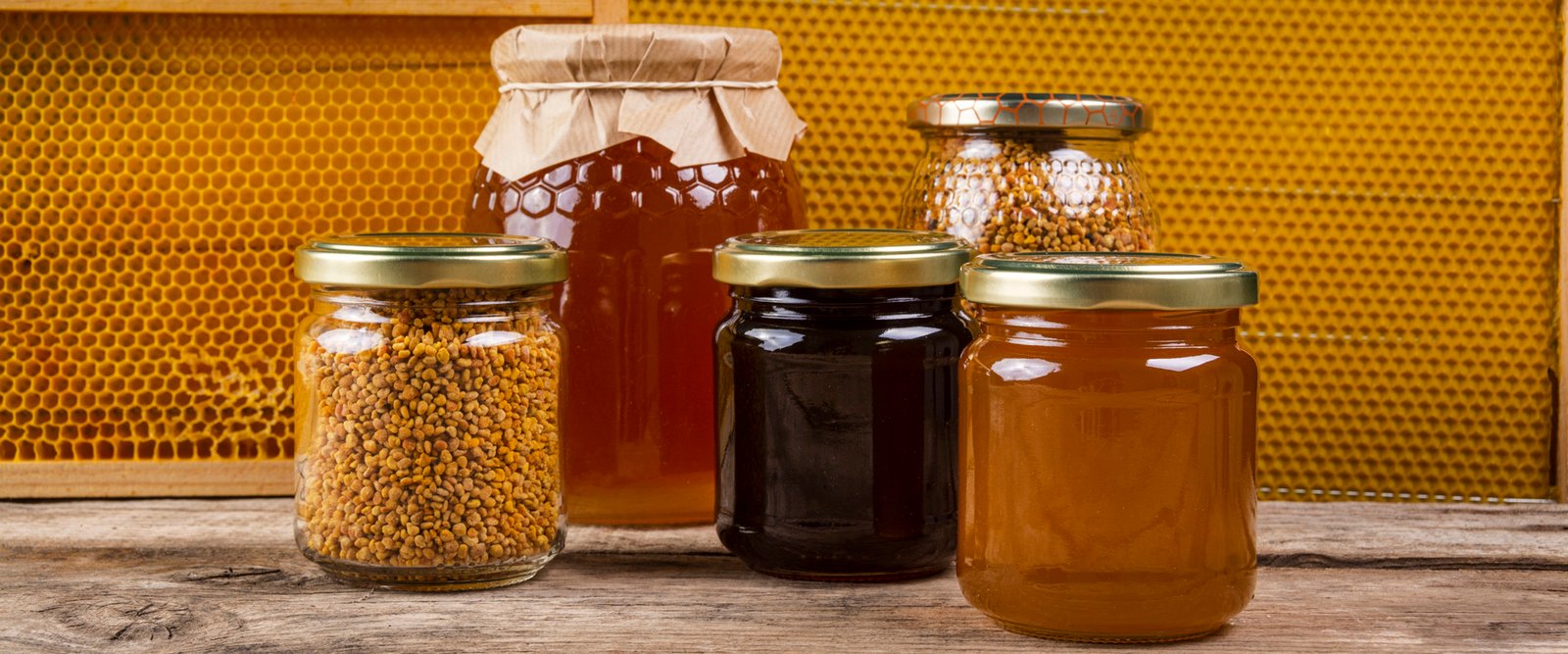
A jar that drips honey is a customer complaint. A jar that gives something to the honey is a compliance problem, and the recall behind it costs more than the container ever did. The two failures are handled by different people in different departments, and importers who treat them as one risk usually find out which one they missed at the port.
Food contact compliance for honey packaging means the rules that decide whether a jar, a closure, a liner or a filling-line gasket may legally touch food in the market you sell into. Two systems matter most: the US indirect food additive rules in Title 21 of the Code of Federal Regulations, and the EU framework Regulation (EC) No 1935/2004 with the plastics measure Regulation (EU) No 10/2011 sitting under it. This piece is written for importers, distributors and packing houses buying containers in volume. It sets out what to ask a factory for, what the numbers on a test report mean, and which documents hold up when an inspector asks.
What food-contact compliance means in practice
Neither system works like a product approval. FDA does not issue a certificate saying a jar is approved. In the US, every substance in the material has to be authorised for the intended use by one of several routes, and the material has to be made under good manufacturing practice and be “of a purity suitable for its intended use”, the standard set in 21 CFR 174.5. The accurate phrase is “FDA compliant”, not “FDA approved”, and a supplier that offers you an approval certificate is telling you something.
The EU starts from the same place with different wording. Article 3 of Regulation (EC) No 1935/2004 requires materials to be made so that they do not transfer constituents to food in quantities that could endanger human health, change the composition of the food in an unacceptable way, or damage its taste and smell. Good manufacturing practice is a separate obligation, set by Regulation (EC) No 2023/2006.
In both systems the duty lands on whoever places the goods on the market. If you import, the compliance file is yours even though the test data sits with the factory. That is the reason to treat documentation as a purchase condition rather than an afterthought.
Honey is not a mild food to pack. Published reviews put its pH between 3.4 and 6.1 with a mean around 3.9, water content around 17% and water activity around 0.56 to 0.62. It is acidic, concentrated, shelf-stable for years, and it sits in the container for the whole of that shelf life. Acid pulls metals out of closures. Long contact time gives slow migrants time to move. Any packaging decision that was made for a dry, neutral product needs re-checking before it is used for honey.
The US system: 21 CFR 174 through 178
FDA treats packaging as an indirect food additive. A material is a food additive if it may reasonably be expected to become a component of food, which is exactly what migration does. The general provisions live in Part 174 and the material-specific rules follow.
- Part 175 — adhesives and coatings.
- Part 176 — paper and paperboard.
- Part 177 — polymers, including the resins used for bottles, jars, tubs and closures.
- Part 178 — adjuvants, production aids, colorants and sanitisers.
- Part 181 — prior-sanctioned substances; Parts 182, 184 and 186 — GRAS substances.
A substance used in a food-contact material has to be covered by one of those listings for the intended conditions, or by one of three other routes: a Food Contact Substance Notification (FCN), a Threshold of Regulation exemption under 21 CFR 170.39 where exposure is very low, or generally recognised as safe status. An FCN is only effective for the substance made by the manufacturer or supplier named in it, under 21 CFR 170.100, and FDA’s review is finished once 120 days have passed without objection under 21 CFR 170.102. The same resin from a second supplier is not automatically covered, which is why resin traceability matters on a repeat order.
Polymers under Part 177
Each entry names the polymer, its identity specifications, the optional substances permitted with it, and the extractive limits that apply. Polypropylene and polyethylene sit under 21 CFR 177.1520 in Part 177, and PET under 21 CFR 177.1630. The limits are written per polymer: polyolefins carry limits for hexane- and xylene-soluble extractives, nylon resins carry limits for extractable fractions into water, 95% ethanol, ethyl acetate and benzene, and rubber articles intended for repeated use carry limits for extractives into water and n-hexane.
How the testing reads on a US report
US testing is extraction-based rather than migration-based in the EU sense. Laboratories use distilled water for aqueous foods with no free fat, 8% and 50% ethanol for alcoholic foods, and n-heptane for fatty foods, with the solvent chosen from the food type covered by the applicable citation. Time and temperature are set to the worst conditions the article will actually see.
There is no single overall migration limit written into 21 CFR for plastics the way there is in the EU. The benchmark used in trade is total extractives from the food-contact surface below 0.5 mg per square inch, about 0.078 mg/cm², against the limits in the citation or the FCN. For honey, a water-based acidic food with no fat, the water and aqueous ethanol work is what decides the answer; a fatty-food solvent is not normally the governing case.
What to ask for on the US side: the specific CFR citation for each layer and each closure component, and the extraction results against that citation. A statement reading “FDA compliant” with no citation does not tell you anything you can defend.
The EU system: 1935/2004 plus 10/2011
The framework Regulation applies to every material. On top of it, specific measures exist for some material groups: plastics under Regulation (EU) No 10/2011, ceramics under Directive 84/500/EEC, regenerated cellulose film under Directive 2007/42/EC, and active and intelligent materials under Regulation (EC) No 450/2009. Where no specific measure exists, the general requirements of Article 3 apply and national law fills the gap.
Three articles of the framework Regulation come up in every audit:
- Article 15, labelling. Materials not yet in contact with food must carry the words “for food contact” or the glass-and-fork symbol, plus any special instructions, the name and address of the responsible operator in the Community, and identification allowing traceability.
- Article 16, declaration of compliance. A written declaration and supporting documentation must be available.
- Article 17, traceability. Operators must be able to identify who supplied a material and who they supplied it to.
For plastics, Regulation (EU) No 10/2011 is where the numbers live. Only substances on the Union List in Annex I may be used, subject to the restrictions attached to each one. Article 12(1) sets the overall migration limit at 10 mg of total constituents released per dm² of food contact surface. Article 12(2) derogates for materials intended for infants and young children, where the limit is 60 mg per kg of food simulant. Article 11(1) sets specific migration limits in mg per kg of food, and Article 11(2) applies a generic specific migration limit of 60 mg/kg to substances with no listed limit of their own.
Annex II carries restrictions on metals used in manufacture. Published summaries of that annex give limits such as antimony at 0.04 mg/kg, nickel at 0.02 mg/kg, manganese at 0.6 mg/kg, zinc at 5 mg/kg, and lead, cadmium, mercury, chromium and arsenic as not detectable. Primary aromatic amines are controlled at 0.002 mg/kg detection where no specific limit is set, and 0.01 mg/kg for the sum of other unlisted amines. These numbers apply to substances deliberately used, so the formulation declared by the resin and masterbatch supplier is what drives them.
Two newer rules change what a 2026 order should say. Regulation (EU) 2024/3190 prohibits bisphenol A and listed hazardous bisphenols in food contact materials, and it applies from 20 January 2025, so a BPA-free statement on a closure coating is now a dated legal claim rather than a marketing line. Recycled content is governed separately by Regulation (EU) 2022/1616, which requires the recycler and the process to be entered in the Union register; post-consumer recycled plastic in a honey jar is not a simple substitution.
Glass and metal: where EU harmonisation stops
Annex I of 1935/2004 lists glass, and metals and alloys, among the material groups for which the Commission may adopt specific measures. No specific measure has been adopted for either. In practice that means the general safety requirement of Article 3 applies, and each Member State polices it through its own rules.
The consequence for an importer is simple and unpopular: a stainless tank or a glass jar can be lawful in one EU country and challenged in another. The national systems commonly encountered are Germany’s LFGB with the Bedarfsgegenständeverordnung, the French DGCCRF information sheets, the Italian Ministerial Decree of 21 March 1973 covering stainless steel and other materials, and the Dutch Warenwet commodities regime. Ceramics are the exception with a European measure: Directive 84/500/EEC sets lead and cadmium release limits.
For honey packaging the metal that matters is usually not the jar but the lid. A metal closure is a substrate plus a coating, and coatings have no harmonised EU measure either, so the coating is assessed under Article 3 plus the national rules, with Regulation (EC) No 1895/2005 setting limits for certain epoxy derivatives used in them. Ask for a declaration for the coating as a separate item, not as a line inside the closure’s general statement.

Stainless steel grade is a purchasing decision with a compliance tail. Grades differ in nickel and chromium content, and the release limits are set by national rules rather than a single European number. Because those limits vary by country and by the grade actually supplied, treat the release figure as “varies by source and model — ask the supplier for a measured test report against the destination country’s rule”, and ask for the mill certificate showing the grade at the same time.
Migration testing: the simulants
Migration into honey is measured into simulants, because measuring in honey is not practical. Regulation 10/2011 names six, and the choice follows the food type.
| Simulant | Composition | Stands for | Relevance to honey |
|---|---|---|---|
| A | 10% ethanol (v/v), or water | Aqueous foods, pH above 4.5 | Used for the sugar-and-water character of honey |
| B | 3% acetic acid (w/v) | Foods with pH below 4.5 | Normally the governing simulant; honey averages pH 3.9 |
| C | 20% ethanol (v/v) | Alcoholic foods up to 20% and some hydrophilic foods | Used where an ethanol-based product is also packed |
| D1 | 50% ethanol (v/v) | Oil-in-water emulsions and alcoholic foods above 20% | Not normally triggered for honey |
| D2 | Vegetable oil or substitutes | Fatty foods with free fat on the surface | Not triggered; honey contains no fat |
| E | Poly(2,6-diphenyl-p-phenylene oxide), MPPO | Dry foods | Not applicable to liquid honey |
Overall migration is measured in simulants A, B, C, D1 and D2. Simulant E is used for volatile substances and dry foods, so it is not needed for an overall migration check. The Union Guidelines on Regulation (EU) No 10/2011 explain the logic: 10 mg of constituents released per 1 dm² is treated as the point above which migration counts as an unacceptable change to the food.
Migration testing: time and temperature
Annex V sets standardised conditions, and these cannot be varied to suit a convenient test. The condition is chosen from the worst foreseeable use, and the higher conditions cover the lower ones.
| Test | Contact time and temperature | Conditions it covers |
|---|---|---|
| OM0 | 30 min at 40 °C | Short contact, 30 minutes or less, at cold or ambient temperature |
| OM1 | 10 d at 20 °C | Frozen and refrigerated contact |
| OM2 | 10 d at 40 °C | Long-term storage at room temperature or below, including hot fill and heating up to 100 °C for the permitted time |
| OM3 | 2 h at 70 °C | Hot fill or heating to 70–100 °C without long-term storage afterwards |
| OM4 | 1 h at 100 °C or at reflux | High temperature up to 100 °C, all food types |
| OM5 | 2 h at 100 °C, or 1 h at 121 °C | High temperature up to 121 °C; worst case for polyolefins |
| OM6 | 4 h at 100 °C or at reflux | Contact above 40 °C with simulants A, B, C or D1 |
| OM7 | 2 h at 175 °C | High temperature fatty food above the OM5 conditions |
For a honey jar sold ambient and stored for a year or more, OM2 at 10 days and 40 °C is the normal starting point, and it is the condition a competent laboratory will propose without being asked. If the packer fills warm, or if the jar is sold with instructions to warm it to liquefy crystallised honey, the contact temperature in the specification has to reflect that. A jar sold to consumers as reusable is a repeat-use article: it is tested three times in succession, and each result must be lower than the one before it.
The surface-to-volume ratio decides how a result is expressed. Article 17(1) requires the real ratio in actual or foreseen use, and Article 17(2) sets a standardised 6 dm² per kg of food for containers holding less than 500 ml or more than 10 litres, and for films and sheets. For caps, gaskets, stoppers and similar sealing articles, Article 17(3) requires the result in mg/kg using the actual content of the container the closure is intended for, or in mg per article where the intended use is unknown. A closure tested against nothing is not a closure with a compliance result.
Honey-specific points that change the test plan
The acidity is the first one. With honey averaging pH 3.9 and ranging to 6.1, simulant B is normally in scope, and a formulation that passes in simulant A only has not been tested for the product. The second is contact time: honey has a long shelf life and the container is the storage vessel, not a transit wrapper, so a short-duration condition is not an honest choice.
The third is the closure and the liner. Honey is packed with a headspace that sees warm filling and cold storage, and the liner, the lacquer and any induction-seal layer are all food contact materials in their own right. Each needs its own declaration. The fourth is reuse: if the jar is marketed as one that will be refilled at home, it is a repeat-use article and needs the three-exposure series.

Fifth is the honest gap. Honey character varies by floral source, and the simulant set is an approximation of it. Where a specific result matters, testing in the actual product is allowed and, under Article 18(6), results obtained in food take precedence over results obtained in a simulant.
Declaration of compliance: the fields it must carry
A declaration of compliance for a plastic component is not a free-form letter. Article 15 of Regulation 10/2011 requires it, and Annex IV lists what it must contain.
| Annex IV item | What it means for a honey container order |
|---|---|
| 1. Identity and address of the issuing operator | The company signing the declaration, not the trading name on the invoice |
| 2. Identity and address of the manufacturer or importer | Where the resin and the article were actually made |
| 3. Identity of the material or article | Grade, specification number, colour, and enough detail to tie it to the batch |
| 4. Date of the declaration | A DoC without a date is not a DoC |
| 5. Confirmation of compliance | Reference to Regulation 10/2011 and to Articles 3, 11(5), 15 and 17 of 1935/2004 |
| 6. Restricted substances information | Substances subject to SML or other restrictions, sufficient for downstream compliance |
| 7. Dual-use substances | Substances also authorised as food additives or flavourings, with migration data |
| 8. Conditions of use | Food types, contact time and temperature, and the surface-to-volume ratio verified |
| 9. Functional barrier confirmation | Where a multi-layer structure relies on a barrier layer |
Field 8 is the one that fails most often on imported packaging. A declaration that lists no food types, no contact time and no temperature, or that omits the surface-to-volume ratio, does not tell a packer whether the container suits their use. Article 15(3) also requires the declaration to be renewed when a substantial change in composition or production changes migration, so a declaration issued before a resin or masterbatch change is out of date.
Supporting documentation sits behind the declaration and does not travel with the goods. Article 16 requires it to be produced to the national authority on request, and it should contain the test conditions and results, calculations or modelling, and the reasoning behind the compliance statement. A supplier that cannot produce it when asked is the risk, not the paperwork itself.
Building the file: what a buyer actually asks for
Write the documentation requirement into the purchase order rather than the email thread. For a honey packaging programme, the set is:
- DoC per component. One for the jar or bottle body, one for the closure, one for the liner, one for any coating or print layer that can contact food.
- Overall migration report naming the simulants, the OM condition and the surface-to-volume ratio used.
- Specific migration reports for every restricted substance in the declared formulation, including metals and any amines or plasticisers in scope.
- NIAS statement. Non-intentionally added substances are assessed under Article 19 against internationally recognised risk assessment principles; the reasoning should exist in writing.
- BPA-free statement referencing Regulation (EU) 2024/3190, for coatings and closures.
- Glass: heavy-metal release data against the destination country’s rule, or Directive 84/500/EEC where the article is ceramic.
- Metal: mill certificate with the grade, plus a release test against the destination country’s rule.
- Traceability. Production batch or lot identification that links the shipped goods to the report, which is what Article 17 asks for.
- US market: the 21 CFR citation for each polymer layer and closure material, with extraction results against it.
Supplier document checklist for honey packaging
- Confirm the destination market first, and work from that market’s rules rather than a document written for another one.
- Confirm every food-contact component has been identified, including the closure, the liner, the seal and any print or lacquer.
- Obtain the declaration of compliance, dated and signed, and check it against the nine Annex IV fields.
- Check that the declared food types, contact time, contact temperature and surface-to-volume ratio match your actual filling and storage conditions.
- Obtain the overall migration report, and confirm the OM condition covers your shelf life and any hot fill or consumer warming.
- Obtain specific migration results for the restricted substances in the declared formulation, not a generic statement.
- Ask for the BPA-free statement for coatings and closures, referencing Regulation (EU) 2024/3190.
- For glass or metal, obtain release data against the national rule of the destination country, plus the mill certificate for the steel grade.
- For the US, obtain the 21 CFR citation per polymer layer and closure material with extraction results against it.
- Confirm batch identification links the shipped goods to the reports, and that the declaration has not been overtaken by a formulation change.
- File the supporting documentation where it can be produced quickly, because Article 16 expects it on request.
When to lock the packaging specification
Packaging is ordered months ahead of the honey it holds, and the two calendars do not match. In the northern hemisphere the main extraction runs from roughly June to September, packing follows into October, and containers for the following season are normally specified and ordered in the first quarter so that testing and artwork are finished before the flow starts.
In the southern hemisphere the calendar shifts by about six months: the main flows run from roughly October to March in Australia, New Zealand, Chile and Argentina, so container specifications are locked in the second half of the year and landed before the flow opens. Importers serving both hemispheres should hold one approved packaging specification and one documentation file, and draw against it twice, rather than re-qualifying a container under time pressure each season.
Food contact compliance is a document problem before it is a chemistry problem. The chemistry is done by the resin supplier and the converter; what an importer controls is whether the file exists, whether it matches the goods in the container, and whether it was renewed when the formulation changed. Honey is an acidic, long-contact, high-sugar product, and it is worth treating any packaging that has only ever been tested against water and a short contact time as unproven until the reports say otherwise.
Enzher supplies honey containers as a manufacturer, and the documentation set above is the one we work to on export orders. The glass honey jar range covers the sizes that carry a full EU or US label panel, and the custom-logo glass jars are the usual starting point for private label programmes. On the plastic side, the plastic honey jar and container range includes squeeze and wide-mouth formats, and the PET square bottles from 180 ml upward are frequently specified for food service packs. Container and closure should be qualified together, because the closure is where most honey packaging compliance problems start. Honey is an agricultural product with a supply chain of its own: the FAO pollination pages set out why managed colonies, and the equipment and packaging around them, sit inside a wider production system.