
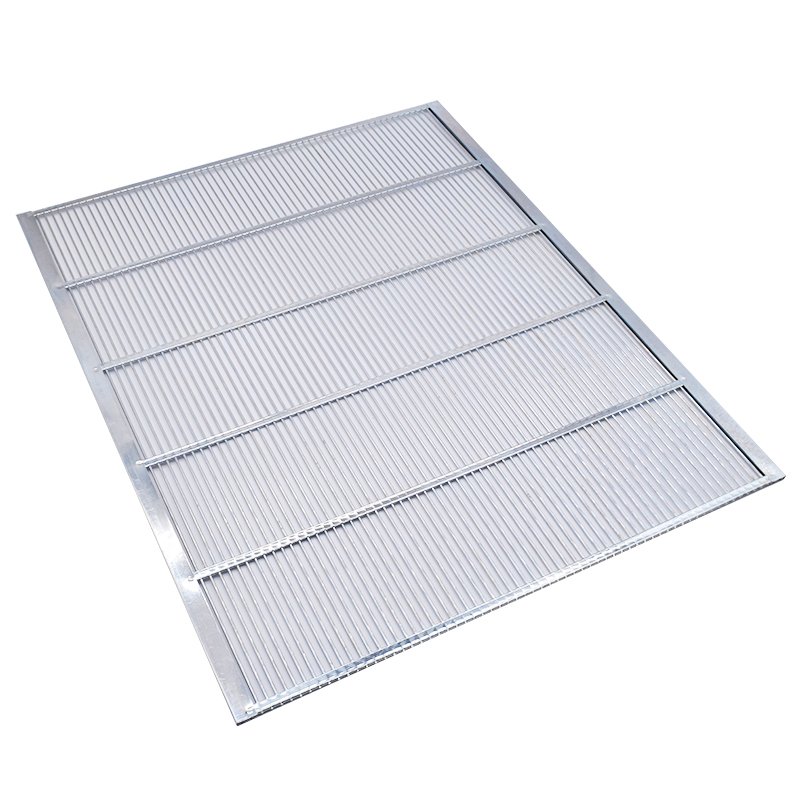
A queen excluder does one thing: it lets a worker through and stops a queen. Everything about the part is a dimensional problem, and the material argument is really an argument about which material holds its dimensions after three seasons in a hot shed.
This is written for commercial operations and for distributors buying excluders by the pallet. It covers the gap numbers that matter, what metal and plastic actually do differently over time, and the specification worth writing into a purchase order so that two batches measure the same.
The gap: what the numbers are
The widely quoted figure for an excluder gap is 4.2 mm. Published references describe the bar spacing at 4.2 mm, roughly 1/6 inch, with other sources describing openings limited to 0.163 inch, which is about 4.1 mm. Supplier and practitioner writing typically puts the working band between about 4.1 mm and 4.4 mm.
The biology behind the number is body width. Commonly quoted thorax measurements put workers between about 3.5 mm and 4.0 mm and a mated, laying queen between about 4.5 mm and 5.0 mm, which is why a gap near 4.2 mm passes one and stops the other. Those are general figures rather than measured data from a single study, and they vary with subspecies and with the queen’s age, so treat them as the reason the band exists, not as a specification you can quote in a contract.
Two consequences follow, and both are operational. A virgin queen is slimmer than a laying one, so an excluder is not a reliable barrier during queen rearing or immediately after a swarm. And drones are wider than either, so drones cannot pass — which means a colony with supers on needs an upper entrance, or drones accumulate under the grid.
| Gap measurement | What happens in the hive | Verdict |
|---|---|---|
| Below about 4.0 mm | Workers squeeze through with difficulty; traffic slows at the grid and nectar goes into the brood box instead | Fail. Slows the crop more than an open hive would |
| 4.1 to 4.4 mm | Workers pass freely; a mated laying queen and drones are held below | The accepted working band |
| 4.2 mm nominal | The figure most manufacturers build to | Use as the nominal on the order, with a tolerance on both sides |
| Above about 4.5 mm | Small or young queens begin to pass; brood appears in supers | Fail. The whole reason for the part is gone |
| Any nominal value, but varying by more than about 0.2 mm across one sheet | Workers find the wide lanes and use them; the queen finds the wide lanes too | Fail on consistency, not on nominal |
That last row is the one buyers miss. A sheet whose average gap is 4.2 mm, but whose slots run from 4.0 mm to 4.6 mm, is worse than a sheet that is uniformly 4.35 mm, because the bees find the wide slots and the queen does too. Specify the nominal and the spread.

Metal grid versus moulded plastic
Three constructions are sold: round steel wire held in a wooden or metal frame, a flat punched metal sheet, and a moulded plastic sheet. The gap nominal is essentially the same across all three. What differs is how well each holds it.
| Construction | Strengths | Weaknesses | Best fit |
|---|---|---|---|
| Wire grid in a wood or metal frame | Round wire is smooth for wings and easy to scrape clean; a framed grid carries its own bee space above and below, which cuts brace comb; holds its gap under load | Heaviest and most expensive; a wood frame warps if stored wet; a bare metal rim can be cold in spring | Operations planning to keep equipment for years, and colonies that propolise heavily |
| Punched flat metal sheet | Thin, cheap, rigid enough to lie flat | Slot edges can be sharp; bends permanently if pried at a corner; no built-in bee space, so burr comb builds against it | Budget kits where the excluder is treated as consumable |
| Moulded plastic sheet | Lightest and cheapest; can be cut to fit non-standard boxes; does not rust | Creases if lifted by one corner; distorts under weight in heat; a wavy sheet leaves gaps at the box edge that a queen will use; hive tools gouge it | Spare stock, short-season use, and operations that lift with care |
Material choice inside metal matters as well. Galvanised steel is dimensionally stable and cheaper; stainless steel resists rust and cleans to a higher standard at a noticeably higher price. For a buyer in a humid coastal market, or one selling into a market where hygiene documentation is requested, stainless is the easier argument to make.
One claim to discount: sellers of both types advertise that theirs is gentler on bee wings. Search as you like, there is no controlled study comparing wing wear between metal and plastic excluders. Round wire and moulded plastic both avoid the burrs and sharp edges that a badly finished punched sheet leaves, and that is the edge problem that is actually documented. Everything beyond that is marketing.

Gap tolerance and what to put on the order
An excluder is a gauge. Once you accept that, the purchase order writes itself, and it is short.
Nominal gap and tolerance, stated on finished goods. Ask for the nominal in millimetres and the permitted deviation in both directions, measured on the finished part rather than on the tooling drawing. Confirm the method: a slot measured with a pin gauge or a feeler gauge at several points across the sheet, not a single reading at one edge.
Spread across the sheet. This is the clause that catches the real failure. Ask for the difference between the widest and the narrowest slot on one part to be held inside a stated limit, and say how many points are measured and where.
Flatness. A part with a correct gap that bows in the middle is a part with gaps at the box edges. Specify flatness over the length of the sheet.
Size match to the box. A ten-frame sheet trimmed to fit an eight-frame box leaves edge gaps. Buy each size separately, and check that the excluder sits flat on the box it is sold for. The excluder only works if the box above and below match it, which makes the hive body itself part of the specification — worth confirming when you order Langstroth hives in bulk or assemble kits from the hive components category.
Material and finish. Name the metal and the coating, or the polymer. For plastic, ask whether it is UV-stabilised, because a sheet that embrittles in sun is a sheet that cracks when a hive tool touches it in year three.
Fitting, and when the part goes on
Placement is as much of the outcome as the part. Where the super above holds drawn comb and the colony is already working it, bees cross readily. Where the super is bare foundation, workers hesitate at the grid, and the colony stores nectar downstairs instead. The common fix is to put the super on without the excluder, wait until comb is being drawn and filled, confirm the queen is below, then slide the grid in.
Frames underneath matter too: an excluder sits over the brood box, and a frame set that is not square or not spaced consistently leaves the grid bridging a gap rather than lying flat. Check the frames before blaming the excluder, and standardise on one wooden frame specification so both parts come from the same tolerance world.
| Window | Northern hemisphere | Southern hemisphere | Action |
|---|---|---|---|
| Pre-flow ordering | Autumn to winter | July to September | Specify gap, spread and flatness; order per box size |
| Flow starts | April to May | September to November | Add the first super; fit the excluder once comb is being drawn |
| Through the flow | May to July | November to January | Check for drones trapped under the grid; give an upper entrance |
| After extraction | August to September | February to March | Remove the grid when no further supers go on |
| Before winter | By September | By March | Remove without exception; the cluster must reach its stores |
The last row is the one that kills colonies. A winter cluster moves upward as it eats through its stores. Leave a grid between the cluster and the honey above it and the colony starves with feed in the box. Every removal date in that table is a hard date, not a preference.
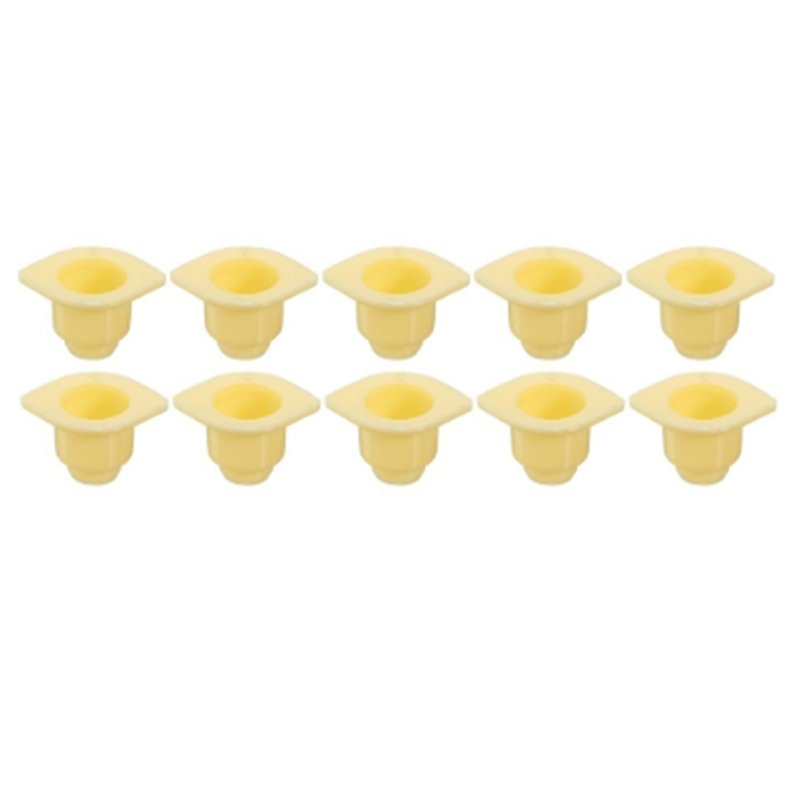
Where the queen is being managed rather than excluded, a queen bee box is the tool for confinement during a specific operation, and it is not a substitute for a grid across the whole box. Use one deliberately and for a short period.
Summary for buyers
Buy the tolerance, not the material label. Metal and plastic both work at 4.2 mm nominal. What separates a part that lasts from one that gets replaced is whether the gap is still 4.2 mm after three seasons of heat, weight and scraping.
Specify nominal gap, spread across the sheet, and flatness. Three lines. Ask for all three on finished goods, with the measurement method named, and ask for a gauge reading from the production lot rather than a catalogue figure.
Match the size to the box. Eight-frame and ten-frame are different parts. A trimmed sheet leaves edge gaps, and edge gaps are how a queen gets through.
Choose construction for the operation, not the price. Framed round wire for long-life equipment and heavy propolis. Moulded plastic for spares, short seasons and careful handling. Punched flat sheet where the part is genuinely consumable.
Fit it after the super is being worked, not onto bare foundation, and give the colony an upper entrance so drones are not trapped.
Diary the removal. By September in the northern hemisphere, by March in the southern. A grid left over winter is a starvation risk, not an inconvenience.
Discount wing-wear claims. There is no controlled comparison between metal and plastic on that point. Well-finished slots and no burrs is the documented requirement.
For colony management and health context, the USDA Agricultural Research Service publishes bee research, the US national beekeeping survey reports operating practice and loss rates, the Honey Bee Health Coalition publishes varroa and colony management guidance, and FAO’s pollination programme covers the wider production picture.