

A container of solid-wood beehives can be held at the destination port for a reason that has almost nothing to do with the hives. The inspector is not examining the cargo. The inspector is examining what the cargo is standing on, and what was used to wedge it into the container.
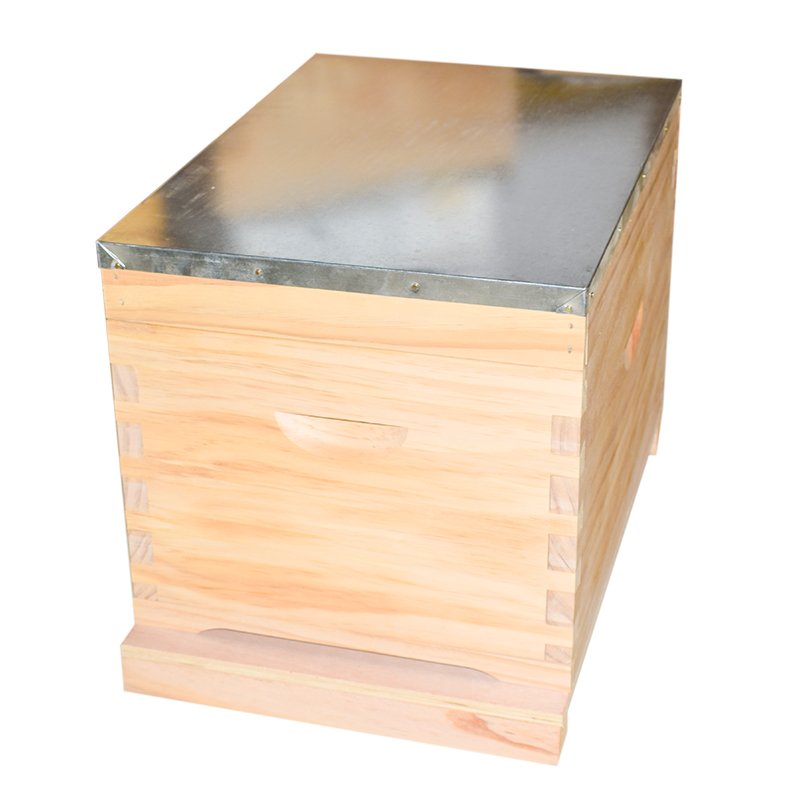
That is the distinction worth settling before anything else, because it decides which paperwork you need. ISPM 15 governs wood packaging material — pallets, crates, cases, dunnage, packing blocks, skids, load boards. It does not govern the goods being carried. A pine Langstroth hive body sold as a product is cargo. The pallet under it is regulated. The wooden crate around it is regulated. The loose timber a loading crew cuts to brace the stack inside the container is regulated, and that last item causes more detentions than any other single failure.
This is written for importers, distributors and commercial operations buying full containers of wooden hive bodies, frames, lids and bottom boards out of China. It covers what the standard covers, what it exempts, the approved treatments and their parameters, how to read the mark, which destinations add national conditions on top, and the documents to demand before the vessel sails.
Wood packaging versus wood as cargo
The standard was adopted in 2002 by the Interim Commission on Phytosanitary Measures under the International Plant Protection Convention, and is titled “Regulation of wood packaging material in international trade”. Its scope paragraph is narrow on purpose: it describes measures that reduce the risk of quarantine pests associated with the movement of wood packaging material made from raw wood in international trade.
The definition doing the work is the one used by both the IPPC and, in its own words, by U.S. Customs and Border Protection: wood packaging material is wood or wood products, excluding paper products, used for supporting, protecting or carrying a commodity. Pallets, dunnage, crating, packing blocks, drums, cases, load boards, pallet collars and skids are all named. A FAO forestry paper on forest pests quotes the same definition and the same list.
Apply that test to a beehive shipment and the answer is usually clean. Hive bodies stacked on a heat-treated pallet are the commodity. The hive manufacturer does not need an IPPC stamp branded into every hive body, and no inspector will look for one there. What the inspector will look for is the mark on the pallet, on any crate, and on any dunnage. If the hives are shrink-wrapped directly onto a pallet with no other wood in the container, there is exactly one regulated article in the load: the pallet.
Two things complicate it. First, if the wood itself is the cargo — a container of pine hive bodies, or of frames — some destinations then treat it as timber imported as a commodity, which sits under a different set of national plant health rules, not under ISPM 15. Australia, for example, keeps a separate bark-freedom requirement for timber imported as a commodity and applies its own tolerances to it. Second, some national authorities ask for a phytosanitary certificate for wooden goods that are the cargo themselves. That is a commodity question, not a packaging question, and it is answered by the importing country’s plant protection organisation.
So the working rule for a buyer is short. Ask two separate questions: what wood is in this container as packaging, and what wood is in it as goods. Get the answer to the first one in writing, with photographs.
What is covered, and what is exempt
The exemption list matters as much as the scope, because it decides whether you can remove the risk rather than manage it. Switching a container from solid-timber pallets to a processed-wood or non-wood alternative takes the load out of the standard entirely.
| Material | In or out of ISPM 15 | Why, and what to watch |
|---|---|---|
| Solid wood pallet, crate, case, skid, load board | In scope | Raw wood, coniferous or non-coniferous; hardwood is in scope too, not just softwood |
| Dunnage, packing blocks, bracing, chocks inside the container | In scope | The most commonly missed item; scrap timber cut at loading has no mark and no certificate |
| Cable drums, spools, wooden reels used to carry goods | In scope | Named in the definition; treat as packaging, not as goods |
| Plywood, particle board, oriented strand board, veneer | Exempt | Made with glue, heat or pressure; considered of sufficiently low pest risk |
| Wood 6 mm or less in thickness | Exempt | Thin wood throughout; a thick block with a thin panel is not exempt |
| Sawdust, wood shavings, wood wool | Exempt under the standard | Do not rely on it: national authorities can still treat loose wood packing as a risk material, and bark in it is a problem everywhere |
| Plastic, metal, paper and cardboard pallets or bracing | Outside the standard | Any solid timber used together with them is still in scope |
| Wood permanently attached to the freight vehicle or container | Exempt | The container floor is not regulated; loose timber laid on it is |
One trap sits in the middle of that table. A pallet made of processed wood is exempt, but a processed-wood pallet repaired with a solid-timber board is not — the repair is raw wood and must be treated and marked by an accredited provider. The same logic applies to a compliant pallet that gets a new deck board in a warehouse. Repairs, remanufacture or alteration void the original treatment, and the re-mark has to come from whoever did the work, not from a stamp you happen to own.
For wooden hive parts as goods, the practical conclusion is unchanged: the hive body is not packaging. But the wood species, the moisture content and the bark left on it may still be relevant to the destination under its own timber rules, so declare both the goods and the packaging honestly on the packing declaration.

The approved treatments and their parameters
Three treatments are described by the standard. In practice one of them is used for essentially all commercial volume, one is rare, and one is being withdrawn market by market.
| Treatment | Parameter that has to be met | Where it stands in practice |
|---|---|---|
| Heat treatment (HT) | Minimum wood core temperature of 56 °C for at least 30 continuous minutes, achieved throughout the entire profile of the wood including at its core | The default. Kiln drying, heat-enabled chemical pressure impregnation, steam or microwave all qualify if they hit the time–temperature schedule. Accepted in every market |
| Dielectric heating (DH) | Minimum core temperature of 60 °C for one continuous minute throughout the profile, using microwave or radio frequency energy | Recognised, far less common, and worth confirming with the destination before accepting a DH mark |
| Methyl bromide fumigation (MB) | Fumigation to the schedule in the standard; U.S. guidance describes treatment in an enclosed area for at least 16 hours followed by aeration to reduce fumigant levels | Being withdrawn. The European Union no longer accepts MB-treated wood packaging, and other markets have followed. Methyl bromide is an ozone-depleting substance under the Montreal Protocol, which exempts quarantine and pre-shipment uses from the phase-out |
Two details on HT are worth carrying into a supplier conversation. The temperature is measured at the core, not at the surface of the chamber, and the 30 minutes is continuous. A kiln log showing a chamber temperature of 56 °C means nothing; what you want is evidence that the core of the thickest member reached it and held it. The second detail is that HT says nothing about moisture. Heat-treated wood can still be green. If you are buying wooden hive parts, moisture content is a separate specification line, and it moves during a sea voyage.
On MB, the position is simple enough to put in a purchase order as one sentence: HT only, no MB marks. An MB stamp is not evidence of non-compliance with the standard, but it is a shipment that several major destinations will refuse on the mark alone, and the cost of that refusal lands on whoever owns the goods at the border.
Reading the IPPC mark
The mark is the whole compliance story in most markets. Under the standard, marked packaging does not require a separate phytosanitary certificate, and a certificate cannot substitute for a missing mark. The mark has four elements, in a bordered rectangle with a vertical line separating the symbol on the left from the codes on the right.
The IPPC symbol, the stylised wheat sheaf, on the left of the vertical line. The ISO two-letter country code for where the wood was treated — CN for China, and note that this is the country of treatment, not necessarily the country where the pallet was manufactured. The producer or treatment provider code, a unique number assigned by that country’s national plant protection organisation; the format varies by country and the code must be separated from the country code by a hyphen. The treatment code: HT, DH or MB.
Two more things you may see. DB indicates debarking; it is no longer applied as a mark element but older marks bearing it are still valid. DUN appears when the item is dunnage rather than a pallet. Neither changes the compliance question.
Placement and condition count as much as content. The standard calls for the mark to be visible, legible and permanent, and guidance in several markets describes it being applied to at least two opposite faces so it can be read without unpacking the stack. Marks painted over, sanded off, or stamped on a face that ends up facing inward fail inspection just as surely as no mark at all.
There is no expiry date. A unit that was treated and marked, and has not been repaired, remanufactured or otherwise altered, does not need re-treatment during its service life. What the mark does not do is protect against later infestation: a stamped pallet showing live insects or fresh bore holes will still be rejected, because treatment kills what was in the wood at the time and nothing after.
Destinations that add conditions of their own
ISPM 15 is a floor, not a ceiling. Several of the largest markets for imported wooden beekeeping equipment write national conditions on top, and the differences are the reason a shipment that cleared in Rotterdam gets held in Melbourne.
| Destination | What is added on top of the mark | What the buyer should prepare |
|---|---|---|
| Australia | Timber packaging in containerised cargo must be declared, with supporting documents. Bark must stay inside the ISPM 15 tolerance: separate pieces under 3 cm wide regardless of length, or over 3 cm wide but under 50 cm² of surface area. Timber imported as a commodity is held to a stricter bark standard, where only ingrown bark around knots and bark pockets between growth rings are acceptable | A packing declaration on company letterhead, photographs of every mark, and a bark check before loading |
| New Zealand | Amber biosecurity regime with the same expectation of a documented packing declaration alongside the physical mark; non-compliant packaging is directed to treatment or re-export at the importer’s expense | Packing declaration, plus a broker who can clear through a transitional facility if directed |
| European Union | Wood packaging entering from outside the EU must carry the mark; MB is not accepted. Non-compliant packaging found at the point of release for free circulation is destroyed. Wooden goods may also fall under the EU deforestation regulation, depending on the product code | Marked HT packaging; check whether the wooden goods fall in the deforestation-free products annex and what due-diligence statement the importer needs |
| United States | CBP can order immediate re-export of unmarked wood packaging. Enforcement is active at all ports and applies to air freight as well as sea | Marks on two opposite faces, and no unmarked dunnage anywhere in the container |
| China, and transhipment hubs | Strict enforcement at entry; port holds are common and storage accrues daily | Confirm the routing, because a transhipment through a third port can add its own inspection |
The pattern across all five is the same: the physical mark is necessary, and the paperwork is what lets you prove it before anyone opens the container. The Australian bark tolerance is the clearest example of why a photograph matters. A compliant pallet with one piece of bark 4 cm wide and 60 cm² in area is non-compliant in Australia, and the options offered to the importer are dry heat treatment, ethylene oxide fumigation or gamma irradiation, bark removal at an approved arrangement site, or export or destruction — all at the importer’s expense.
How a non-compliant load is actually resolved
Border authorities generally work through the same short list of options, and none of them are cheap. The packaging can be treated at the port. It can be re-packed under supervision, with the goods transferred onto compliant pallets. The whole consignment can be ordered re-exported. Or the packaging, and in some cases the consignment, can be destroyed. Which one applies is set by the importing country, and the bill is usually presented to the importer of record.
Re-export cost and treatment cost vary widely by port, by country and by how long the container sits. Numbers quoted by freight operators range from several hundred to several thousand currency units per container, and they move with demurrage and storage. Do not plan against a figure found on a blog. Ask your customs broker for a written estimate for your lane and your commodity code before you book, and treat it as the number that goes into your landed cost model.
Who pays is a contract question, and it is decided by the delivery term in the sale contract rather than by the regulation. Under the Incoterms rules, the point at which risk and cost transfer between seller and buyer differs by rule; a term that leaves import formalities and border costs with the buyer puts a detention bill on the buyer even where the packaging failure happened at the factory. If you are buying on a term that makes you the importer of record, write ISPM 15 compliance into the purchase order as a condition of shipment, not as a request.
Classification is the parallel task. Wooden hive bodies and wooden hive parts sit in different tariff lines from metal or plastic equipment, and the line you declare drives both duty and, in several markets, whether the consignment is picked up for a plant health inspection at all. Check the current tariff lines in the Harmonized Tariff Schedule before you finalise the commercial invoice, and make sure the packing list agrees with it. A packing list that says 25 pallets against a bill of lading that says 26 is a discrepancy customs will make you resolve before release.
Seasonality, lead time and when the risk is created
Packaging compliance is created at the factory and discovered at the port, so the timing question is really a question about when your order is packed.
In the northern hemisphere, importers in North America and Europe place container orders through autumn and winter for the following spring build-up. That is the period when factories run at their highest volume, when pallet suppliers are stretched, and when a substitute pallet of unknown provenance is most likely to be substituted into a load. Inspection pressure at destination rises through the same months as seasonal equipment arrives.
In the southern hemisphere, Australian, New Zealand and South American buyers order around July to September for the spring flow that runs roughly September to December. Their containers land into the tightest biosecurity window of the year, which is exactly why the packing declaration and mark photographs should be in hand before departure rather than requested after a hold.
Either way, the container is stuffed in the exporting country in the weeks before departure. That is the point at which dunnage gets cut, and it is the point at which a compliant load becomes a non-compliant one.
What to ask the factory, and what to ask yourself
Suppliers who ship wooden goods regularly will answer these questions without hesitation, because they answer them for every market. The questions that get evasive answers are the ones worth pushing on.
Ask for the mark photograph before departure, showing the full face of each pallet or crate, with the country code, provider code and treatment code legible. One photograph per container is not enough; ask for one per pallet type and for any dunnage. Compare the provider code against the registration held by the national plant protection organisation in the country of treatment.
Ask whether any dunnage, blocking or bracing is solid timber, and if it is, ask for its treatment evidence in the same form. Better, specify that bracing is to be non-wood — dunnage bags, plastic or processed-wood alternatives — and confirm it in writing.
Ask whether the packaging was repaired after treatment. A replaced deck board invalidates the mark. This is the question most buyers never ask and the one that explains a detention on a load with a valid-looking stamp.
Ask for the treatment provider’s documentation, even though the mark is what gets inspected. Certificates get requested by some destinations, and having them on file turns a three-day correspondence into a three-minute reply. Note that some plant health authorities will not issue a phytosanitary certificate for wood packaging used to transport a commodity, because the mark is the instrument; if wood is the cargo, the position is different.
Ask where the hive wood itself stands. For the goods, the questions are moisture content, species, bark, and whether the destination treats timber as a commodity with its own plant health conditions. A bulk Langstroth hive order and a mixed container of hive bodies raise the same packaging question and different commodity questions, so separate the two in your purchase order. The full range of wooden hive parts and kits sits in the hive components and kits category, and wooden frames and foundation ship under the same pallet rules, which is worth remembering when you order from the frame and foundation category in the same container.
Pre-shipment checklist for wooden hive imports
Work through this before the container is sealed, not after it is on the water. Every line is a document you can request in advance.
- Confirm the scope split in writing. State in the purchase order which wood is goods and which wood is packaging, and require ISPM 15 compliance for all packaging including dunnage.
- Specify HT only. No MB marks. Confirm the destination accepts the treatment code on the mark before accepting it.
- Get photographs of every mark before departure, legible, on two opposite faces, per pallet type and per dunnage type.
- Verify the provider code against the issuing national plant protection organisation’s register, and keep the treatment documentation on file.
- Inspect for bark against the destination tolerance — under 3 cm wide, or over 3 cm wide and under 50 cm² per piece, for Australian timber packaging. Photograph the pallets after stuffing.
- Ask directly about repairs. Any board replaced after treatment requires re-treatment and a new mark from an accredited provider.
- Eliminate loose timber from the container. Specify non-wood bracing, or marked timber with evidence, and check the stuffing photographs.
- Reconcile the documents. Pallet count on the packing list, the bill of lading and the packing declaration must agree, and the commodity code on the invoice must match the goods.
- Lodge the destination-specific declaration. Australia and New Zealand expect a packing declaration on company letterhead in addition to the physical marks.
- Set the delivery term deliberately. Know who is the importer of record and who pays for a detention before you agree the Incoterm.
- Get a written estimate of treatment and re-export cost for your lane, so the number is in the landed cost model rather than discovered at the port.
- Re-check before every repeat order. Requirements change by country and by year; the register of accepting countries and the national conditions on top of it are the two things to re-verify.
None of this is hard, and none of it is expensive compared with a container sitting on the quay. The cost of compliance is a pallet specification and an email thread. The cost of getting it wrong is the same container, on the wrong side of the border, with the storage clock running.
Three references worth keeping open: the standard itself and its annexes are published by the IPPC standards page, U.S. treatment and enforcement detail is set out by U.S. Customs and Border Protection, and where wooden goods rather than packaging are in scope, the EU’s rules on deforestation-free products are the additional layer to check.