
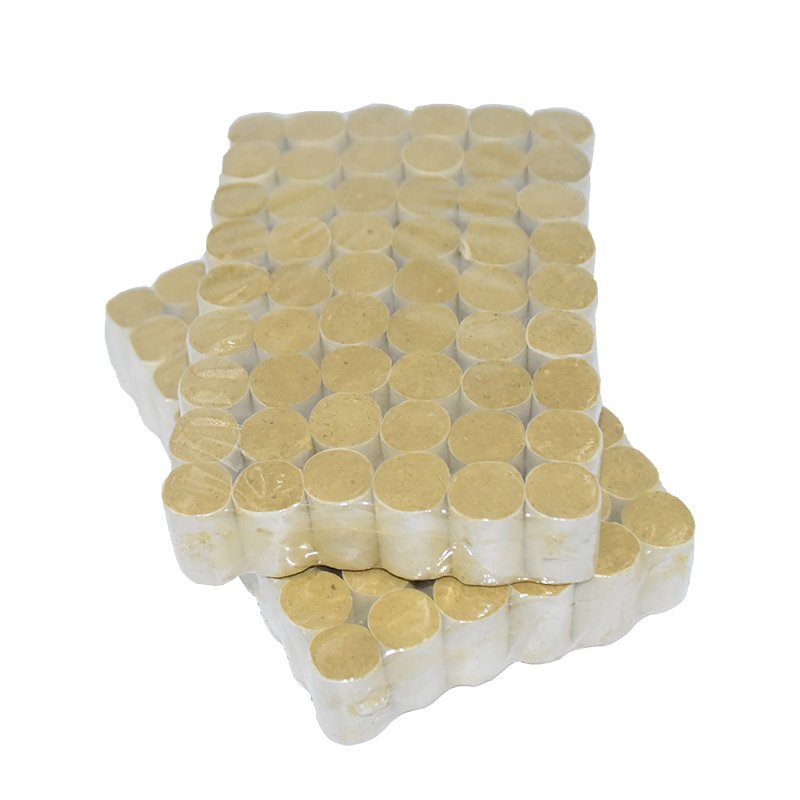
A load of comb that arrives slimy, fermented and smelling of rotten oranges is not a beekeeping failure. It is usually a scheduling failure. The colony held the beetles down for months; the damage happened in the two days between pulling supers and extracting them. Beetle control in warm climates is mostly about that window, plus the floor under the hive and the hygiene of the honey house.
That matters commercially because beetle pressure follows heat and humidity, and those two describe a large share of the markets our buyers ship into. Aethina tumida is native to sub-Saharan Africa and established in the south-eastern United States, much of eastern Australia and parts of southern Europe. Warm, damp soil is what turns low beetle numbers into an economic problem, and warm damp soil is exactly what a tropical wet season delivers.
The life cycle sets the control points
Every control method on the market attacks one specific stage, so the first question is which stage is actually reachable. Adults can be crushed, trapped or excluded; larvae can be trapped on their way out; pupae in the soil can be disrupted mechanically or biologically; eggs inside capped brood are largely out of reach once laid.
The published timings vary with temperature, which is why warm-climate operations see so many more generations. The FAO manual on honey bee diseases states that development of any stage stops below about 10 °C, and that temperatures above 35 °C cause high mortality across all stages. It puts egg hatch at one to six days, with most hatching around three days, and larval development at one to four weeks, usually about two. Pupation in the soil runs two to twelve weeks, typically three to four. A female lays between one thousand and two thousand eggs in a lifetime of four to six months.
Digging stages are the ones that control the population in the medium term, and the numbers are surprisingly sensitive to soil conditions. Bernier, Fournier and Giovenazzo measured pupal survival and duration across combinations of soil temperature and moisture typical of south-eastern Canada, published in the Journal of Economic Entomology (2014, 107(2):531–537). Development took 69–78 days at 16 °C, 47–54 days at 18 °C and 36–39 days at 20 °C, and survival fell with both lower temperature and higher soil water content. Their estimate of the minimum development temperature was 10.2–13.2 °C depending on moisture. Earlier work cited in that paper estimated 70 days at 15 °C and 174 days at 12 °C.
The practical reading: a yard on warm, moist, sandy ground can run several generations in a season while a yard on cold or dry soil struggles to finish one. Surveillance guidance prepared for the European Union reference laboratory records one to six generations per year depending on climate and soil, with adults emerging from soil two to twelve weeks after pupation and becoming sexually mature one to seven days after that.
| Stage | Duration | Condition that drives it | Source |
|---|---|---|---|
| Egg to larva | 1–6 days, most around 3 days | Temperature and humidity | FAO good beekeeping practices manual |
| Larval feeding stage in hive | 8–29 days | Food availability and temperature | EU reference laboratory surveillance guidelines |
| Wandering larva before pupation | Leaves hive, burrows 1–30 cm (records to 60 cm) | Moist, soft, sandy soil; usually close to the hive | FAO manual; EU laboratory guidelines |
| Pupa in soil | 36–39 days at 20 °C; 47–54 days at 18 °C; 69–78 days at 16 °C | Soil temperature and water content; development stops below about 10 °C | Bernier et al. 2014, Journal of Economic Entomology |
| Adult | Females lay for 4–6 months; adults reported to live up to 18 months | Food supply; survival without food or water 9–14 days | FAO manual; Queensland Government; EU laboratory guidelines |
| Full cycle | 5–12 weeks per generation; 1–6 generations per year | Climate and soil type | Queensland Government; EU laboratory guidelines |
Two behaviours are worth building protocols around. Adults hide in cracks and dark corners, and they flatten themselves with their legs tucked under when attacked, which makes them hard for European bees to deal with — African subspecies handle them far better. And larvae leaving the hive to pupate travel across the floor and out of the entrance, which is the one moment in the cycle when they are exposed and predictable.
Where the crop is actually lost
Beetle damage in the apiary gets the attention, but the honey house is where the money goes. Larvae tunnelling through stored comb defecate, the yeast they carry ferments the honey, and the comb turns into a slimy mess that cannot be recovered. Strong colonies suppress beetles; a stack of supers sitting warm and unprotected cannot.
Queensland’s guidance for commercial operations is blunt about timings: extract filled supers within one to two days, render cappings promptly, keep honey houses clean daily, and store equipment where air circulates and humidity stays below 50 per cent. It also recommends placing a fluorescent light near the honey house floor, because wandering larvae leaving stacked supers move toward light and can be swept up and drowned.
Equipment can be sterilised, and the published treatments are specific. Freezing for 24 hours kills all stages in equipment and comb. A temperature of −12 °C kills every stage. Where a cold room rather than a freezer is used, holding equipment at 1–9 °C for eight days works; where equipment is heavy enough to carry thermal inertia, the recommendation is six hours in the freezer followed by twelve days at 1–9 °C. Phosphine fumigation kills eggs, larvae and adults. All of that is cheap compared with writing off a stack of comb, and it is standard practice in beetle-endemic regions.
North Carolina State Extension adds the field habits that keep numbers down before they reach the shed: pull and process supers without delay, remove dead-out equipment from the yard immediately, never throw burr comb on the ground around the hives, shorten inspections because beetles are drawn to the alarm pheromone of a distressed colony, and remove surplus supers that few bees are covering. If larvae are found on the floor, do not brush them onto the ground; remove and kill them by freezing or with soapy water.
Traps: what the different designs do
Trap choice should follow the stage you are targeting, and the honest answer to most trap questions is that traps reduce beetle numbers rather than eliminating an infestation. A weak colony with beetles pouring out is not a trap problem.
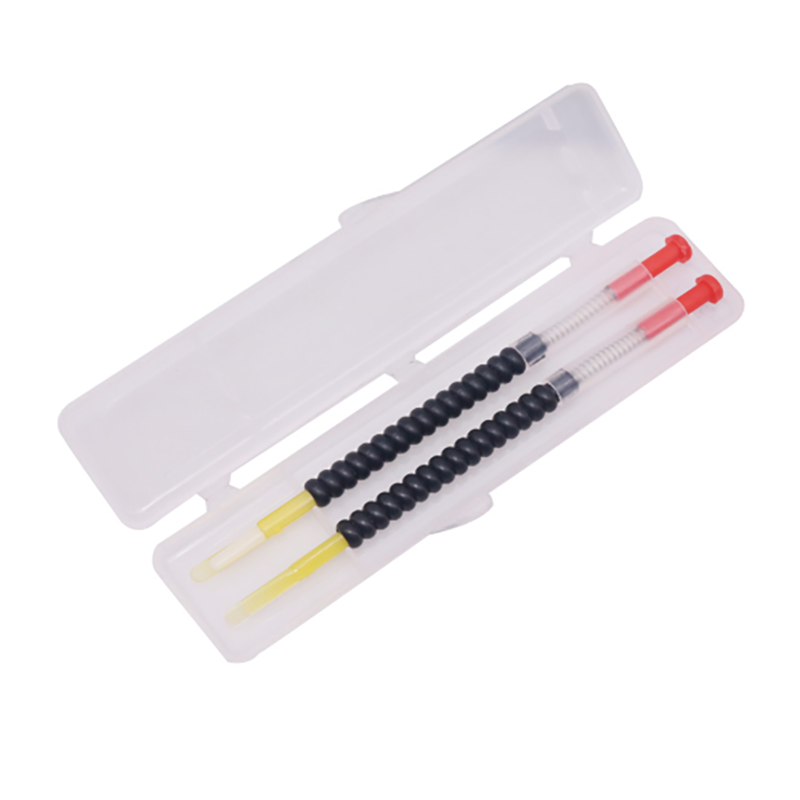
In-hive traps fitted between frames. These sit in the space between top bars where beetles hide from the bees, and they use oil or a killing agent to hold whatever enters. Our own beetle blaster traps work on this principle. They are cheap, they fit any standard spacing, and they do not put anything into the honey. Their limit is coverage: they only catch beetles that walk into them, and a beetle hiding under the inner mat or behind the follower board is untouched.
Floor traps for wandering larvae. Fitted at the floor or the entrance, these catch larvae at the moment they leave, before pupation. A reusable beetle collector trap of this type is worth running through a wet season even when adult numbers look low, because it also functions as a monitoring device: you count what is in it and you know whether your apiary is trending up.
Oil and vinegar traps. Most designs combine an attractant such as apple cider vinegar with mineral oil or soapy water. Extension material describes these as the mainstream mechanical option, and notes that they vary widely in design and efficacy. Cheap to build, cheap to buy, and dependent on being checked.
Chemical harbourages. Some countries register a chemical bait-and-harbourage device for use inside the hive; the Queensland Government notes that Apithor is the only registered chemical trap permitted as an in-hive control measure there. This is a jurisdiction question, not a product preference — check your own registration before importing or reselling anything with an active ingredient in it.
Soil treatments. Diatomaceous earth and slaked lime in the soil around hives kill larvae by abrading the cuticle and drying them out, and Virginia Tech Extension lists both. Entomopathogenic nematodes (Steinernema riobrave, Heterorhabditis indica) infect larvae and pupae in soil and show promising results in laboratory and semi-field work, though a recent Australian review of the field evidence concludes that validation under commercial conditions is still outstanding. Treat biologicals as promising rather than proven.
What we would avoid. The USDA’s own research arm maintains the honey bee health programme, and the position in US extension material has hardened against chemical controls. North Carolina State notes that coumaphos strips are the only registered chemical option but are no longer recommended for this pest, partly because adults are distributed through the hive and do not reliably contact the strip, and it warns that permethrin soil drenches are highly toxic to bees, should not be used preventatively, and must only follow an actual observation of beetles or larvae. The EPA pollinator protection pages set out the labelling rules that apply. Honest framing for a buyer: chemical options exist, they are regulated differently in every country, and none of them substitutes for a strong colony and a clean shed.

Floor hygiene and yard layout
Site choice is a control method in its own right and costs nothing if done before the hives arrive. Pupation needs soil above roughly 5 per cent moisture and works best in soft sandy ground, so hard-packed clay or rock under the stands reduces emergence. Queensland’s long-standing advice is to put hives on rock or hard clay rather than sand.
Floor design is the second lever. A screened or open floor removes the sheltered dark space where adults hide and lets fallen debris drop clear of the cluster. It also changes how you monitor: debris falls where you can see it. Keep the ground beneath stands free of burr comb and wax scrapings, because those feed larvae that drop with them.
Reduce humidity and shade where the climate allows. Several extension sources point out that maintaining a strong colony, minimising unoccupied comb space and lowering humidity inside the box all make the hive harder for beetles to work in. Repairing cracks and split boards closes the crevices that bees cannot police. Requeening weak colonies and keeping varroa under control do more for beetle outcomes than any trap you can buy, because beetle outbreaks follow colony weakness.
| Method | Stage it targets | What it realistically achieves | Constraint |
|---|---|---|---|
| Frame-mounted oil trap | Adult beetles hiding between top bars | Keeps numbers lower; useful monitoring signal | Catches only what walks in; needs periodic checks |
| Floor or entrance larval trap | Wandering larvae leaving to pupate | Intercepts the most predictable stage before soil entry | Must be emptied; larvae killed off-site, not on the ground |
| Freezing equipment 24 h | All stages in comb and boxes | Effective treatment for stored equipment | Needs freezer capacity and rotation planning |
| Cold store at 1–9 °C for 8 days | All stages | Lower-energy alternative to freezing | Heavy stacks may need 6 h freezer first, then 12 days |
| Phosphine fumigation | Eggs, larvae and adults | Treats whole stacks of equipment | Restricted-use fumigant; licensed operator only |
| Diatomaceous earth or slaked lime in soil | Larvae entering soil | Reduces emergence where soil is dry | Washes out in wet weather; safety handling rules apply |
| Entomopathogenic nematodes | Soil-dwelling larvae and pupae | Promising control under warm moist conditions | Field validation still incomplete; product availability varies |
| Permethrin soil drench | Late larvae and pupae in soil | Last-resort option where registered | Highly toxic to bees; permit-bound; never preventative |
Two seasons, one protocol
Beetle calendars run opposite either side of the equator, and the equipment order should follow the same logic.
Southern hemisphere — Australia, New Zealand, South Africa, southern Brazil, northern Argentina. November to March is the high-risk window: soil is warm, humidity is climbing, and colonies are building. This is when larval traps belong in every floor and when extraction windows need to be tight. Queensland-specific guidance was written for exactly this: the wet season and storm season push pupating larvae into ideal soil. Order consumables before November rather than during it.
Northern hemisphere — southern United States, southern Europe, Israel, and increasingly the Gulf. November to February is the quiet season outdoors, but not indoors. Beetles overwinter as adults inside the winter cluster, taking heat from the bees, so numbers do not reset to zero. Use this window to refit floors, sort screens and traps, plan freezer capacity and fix the honey house rather than waiting for May. Gulf and irrigated desert markets are the exception to the winter lull: where irrigation keeps soil moist and warm year-round, pressure does not follow the season.
The FAO maintains background material on why colony condition governs all of this at its pollination pages, and its manual on good beekeeping practices remains one of the clearer published descriptions of beetle biology and its temperature limits.
Specifying traps for a fleet
For distributors and fleet buyers, the buying questions are dull but they decide whether a trap programme survives a season. Ask how many units fit a standard 10-frame body, what kills the beetle once captured, how the trap is emptied and cleaned without spilling oil onto frames, how it survives UV exposure in a subtropical summer, and whether spare parts are stocked for several years. Ask for the material declaration too: anything going between frames should be a resin you can document as food-contact safe.
A reusable small hive beetle trap will usually beat a disposable per season on cost, provided crews actually clean and redeploy them. The rest of the category, including monitoring tools that double as inspection aids, sits in the pest control and apiary accessories range.
Mistakes that cost the most
Leaving supers stacked before extraction. A stack of comb with no bees on it is defenceless, and larvae can ruin it within days. The result is a fermented, unsaleable load and comb that has to be rendered rather than reused. Pull, extract or freeze within one to two days.
Brushing larvae off the floor onto the ground. It looks like cleaning. It is actually seeding the soil under the stand with the next generation, and those pupae will emerge as adults looking for hives. Remove larvae from the yard and kill them by freezing or in soapy water.
Storing equipment damp. Humid, still air around stored comb is what the beetle needs and what your supers will find in an unventilated shed. The result is mould, fermentation and comb that has to be written off before the season even starts. Keep storage below 50 per cent humidity with air moving through the stacks.
Treating preventatively with soil insecticides. Permethrin drenches applied on a calendar rather than after an observation kill non-target insects, breach permit conditions in most jurisdictions, and expose you to residue problems in a product sold as food. Treat only when larvae or beetles are actually present.
Buying traps and skipping colony strength. Traps lower numbers; strong colonies are what actually suppress beetles. Operations that invest in traps while leaving varroa untreated end up with beetle problems they blame on the traps. Requeen, feed and treat mites first, then trap.
Ignoring the yard surface. Putting hives on soft irrigated sand in a warm climate guarantees good pupation conditions all year. Choosing hard ground, raised stands and open floors costs nothing and removes a whole stage from the equation.
Not counting anything. Without a trap count or a debris check per inspection, there is no trend line, and every decision is made on anecdote. Count beetles in traps monthly in the risk season and record it next to colony strength; that single sheet will tell you which interventions are paying.