
Winter losses are decided in autumn. By the time a colony is visibly dwindling it is usually past rescue, and the three things that decide the outcome — enough stores, a dry hive, and a cluster big enough to generate heat — are all set weeks earlier. For a commercial operation the same three items also decide how much replacement stock has to be bought in spring.
The numbers vary by climate more than most buyers expect, so treat any single figure as a starting point and confirm it against local extension guidance. A yard in central England and a yard in Minnesota are not planning to the same target, and neither is a yard in Victoria.
How much stores a colony actually needs
Store requirement is a function of winter length, cluster size, hive insulation and wind exposure. Published guidance clusters into bands by climate rather than by country:
| Climate band | Typical target stores per colony | Approximate frame equivalent | Basis |
|---|---|---|---|
| Mild / Mediterranean, short winter | 14–20 kg | 6–8 full deep frames | Australian guidance of at least 18 kg; UK association guidance around 18 kg |
| Moderate temperate | 18–27 kg | 8–11 full deep frames | US zone 6–7 style guidance, 40–60 lb |
| Cold continental / prairie | 27–41 kg | 11–13 full deep frames or more | US zone 3–5 style guidance, 60–90 lb |
Frame weights used to convert: a full deep Langstroth frame of capped honey is commonly given as roughly 2.7–3.6 kg, with Australian guidance quoting about 2.2 kg for a full-depth frame. Because the spread is that wide, weigh a frame on your own equipment once and use that number. Everything else in the calculation depends on it.
New South Wales Department of Primary Industries states the rule from the hive side rather than the scale side: colonies should be reduced to two boxes, with a strong colony holding one box nearly full of honey, and a weaker colony wintered as a single box with three or four frames full of honey. That is a useful cross-check because it is what an inspector looks at.
One point that catches people out: colonies rarely starve in mid-winter. They starve in late winter and early spring, once brood rearing restarts and consumption climbs before there is any forage. Build the target for that period, not for January.
Checking stores without opening the hive
Opening a hive in cold weather breaks the propolis seal, chills the cluster and costs more than the information is worth. Three methods avoid it.
Hefting. Lift one side of the hive from the back. Experienced beekeepers describe a correctly provisioned colony as feeling nailed to the stand. It is subjective, but with a calibrated arm it is fast and it scales to hundreds of colonies in a way frame counting does not.
Hive scales. A scale under a sample of colonies turns guesswork into a trend line. A sudden drop in weight between checks is the signal to intervene; a steady slow decline is normal consumption. For an operation running several hundred colonies, instrumenting a sample of twenty is usually enough to manage the rest.
Frame count at the last warm inspection. Count frames that are at least about 80% capped honey and multiply by your measured frame weight. This is the method to use when setting the autumn feeding budget, because it produces a deficit figure you can order against.
Feeding: what to feed, and the temperature that decides it
Autumn feeding uses heavy syrup, two parts sugar to one part water by weight. The National Bee Unit recipe is given more precisely as 1 kg of sugar to 630 ml of water. Heavy syrup is used in autumn because it carries less water for the bees to evaporate before they can cap it.
The controlling variable is temperature, not calendar date:
| Daytime temperature | Feed | Reason |
|---|---|---|
| Above about 10 °C, bees still flying | 2:1 sugar syrup by weight | Bees can evaporate the water and cap the stores |
| Consistently below about 10 °C | Fondant or sugar brick above the cluster | Bees cannot cure liquid syrup; uncured stores ferment |
| Below about 13 °C, bees inactive | Fondant only | Australian guidance puts the inactivity threshold near 13 °C; syrup will not be taken |
| Any temperature | Never thin 1:1 syrup in autumn | Too much water, too much energy spent evaporating it |
The 10 °C line is the one to plan around. Below it, switch to fondant placed directly over the cluster on the top bars. Above it, feed syrup in bulk rather than in small amounts: small feeds stimulate the queen to lay at exactly the wrong time of year, and a few litres a week is what most operations end up doing by accident.
Budget more sugar than the raw deficit. Bees burn part of the sugar while converting and curing it, and the loss depends on temperature and colony strength. Published conversion ratios differ between sources, so ask your local extension service or supplier for a figure from your own climate rather than taking one from a calculator.
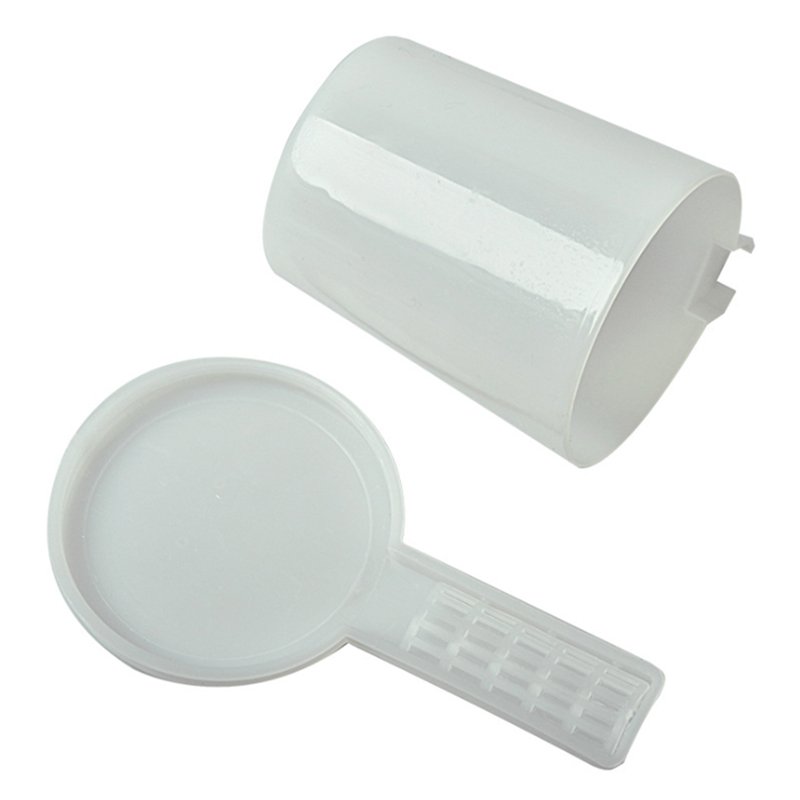
Feeder choice matters at commercial scale because refilling is labour. A top feeder that can be filled without opening the brood box keeps the cluster sealed and cuts the disturbance out of the job entirely. The round rapid top feeder is built for exactly that, and the square plastic feeder covers yards that want larger capacity per visit. Both sit in the wider hive components and kits range.
Insulation, ventilation and the moisture problem
Insulation works, and there is recent peer-reviewed evidence for it. St Clair, Beach and Dolezal ran a randomised trial across eight apiaries in central Illinois and reported that covered colonies consumed less of their stores and survived better than uncovered controls, at 22.5% higher survival, even in a region without extreme cold (PLoS ONE, 2022). Iowa State University Extension reports that wrapping and insulating hives increased overwinter survivability by more than 20% in their own work.
The mechanism is straightforward. A colony holds its brood nest near 34–35 °C and, once ambient temperature drops to roughly 14 °C, forms a winter cluster that generates heat by shivering flight muscles. Insulation slows the loss of that heat, so fewer kilograms of honey are burned holding temperature.
Moisture is the other half of the problem and the one that kills more colonies. Warm, humid air rises from the cluster. If it meets a cold inner cover it condenses and drips back onto the bees, and wet bees chill fast. Standard answers are a notched inner cover giving a small upper entrance, or a moisture-absorbing quilt box filled with wood shavings above the frames.
Do not over-simplify this. Work summarised by the Swiss apiculture technical portal notes that Fries (1982) found top ventilation strongly reduced visible moisture and mould in wintering hives, yet did not improve survival, food consumption, spring strength or the following harvest. The same review notes that in a temperature-controlled wintering building, where outdoor swings were already damped, adding insulation produced no detectable difference in consumption or spring development (Stalidzans et al., 2017). Insulation pays where heat loss is the binding constraint; it does nothing where it is not.
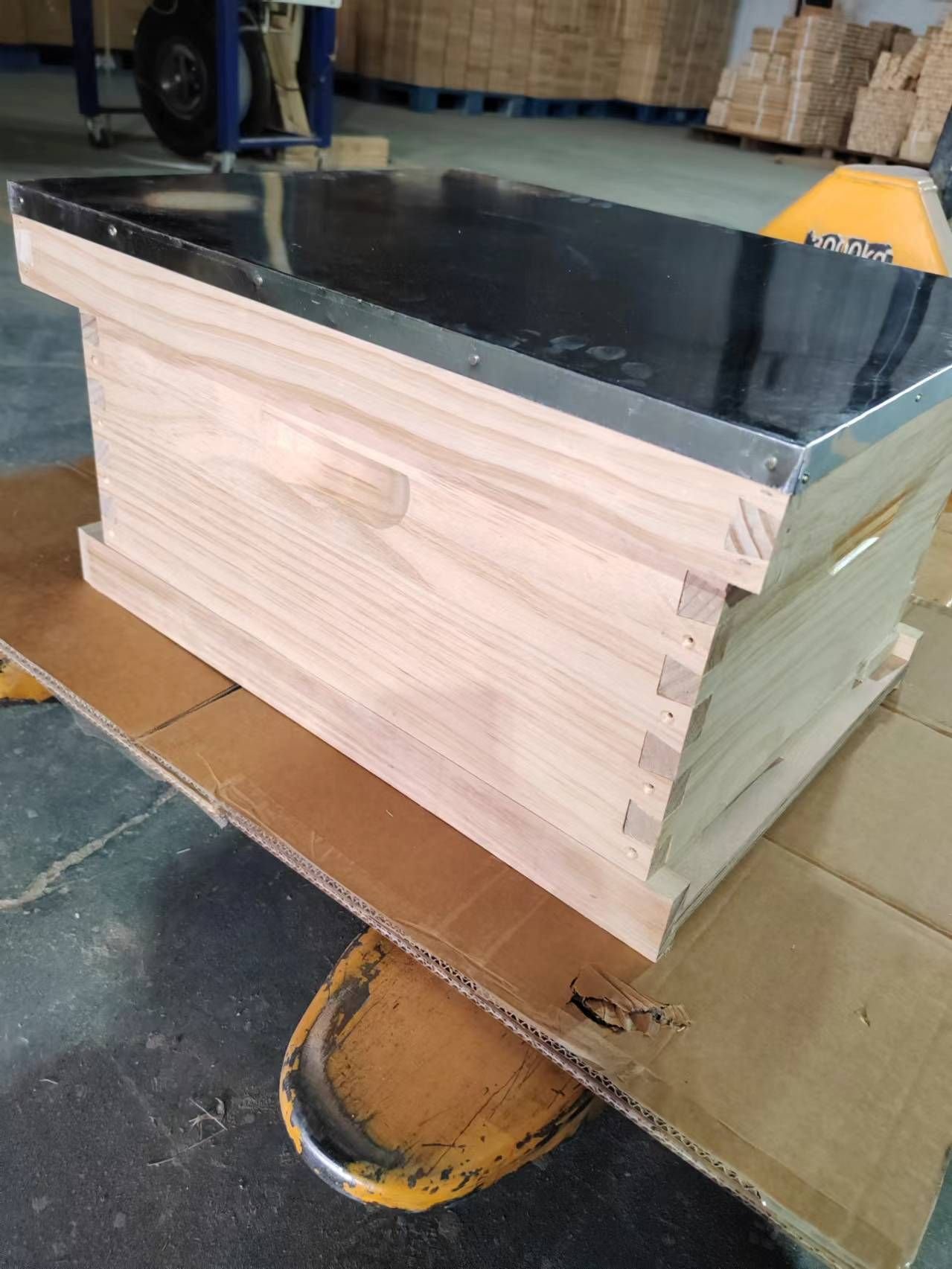
Timber and hive construction matter here as much as wraps. A wooden quilt box handles moisture at the top of the stack; a three-layer insulated plastic hive builds the insulation into the box so there is nothing to fit or store.
Timing: two hemispheres, two calendars
Every task below shifts by six months between hemispheres. A supplier shipping to both should carry stock and documentation for both.
| Task | Northern hemisphere window | Southern hemisphere window |
|---|---|---|
| Assess stores and set the feeding budget | Late August to early September | Late February to March |
| Feed 2:1 syrup | September, finished before October | March to April, finished by early May |
| Switch to fondant | Once highs sit below about 10 °C, typically October to November | Once highs sit below about 10–13 °C, typically May |
| Varroa treatment | Start by early September, before winter bees are raised | Autumn, March to May, before the winter bee generation |
| Fit insulation, wraps and moisture control | Before daily highs drop below 10 °C, typically October to November | April to May, before the first cold snap |
| Mouse guards and entrance reduction | Early October | April |
| Closed period, checks by hefting only | November to February | May to August |
| Broodless window for oxalic acid | November to January, latitude dependent | June to August |
UK guidance is blunt about the sequencing: check stores at the end of August, finish feeding by early September, and start varroa treatment by early September so the winter bee generation is raised with a low mite load. Leaving any of it to October is the common failure. Australian guidance puts the final pre-winter inspection in April or early May at the latest, closes hives from May to September, and reduces entrances to roughly 50–75 mm so weak colonies can guard against robbing.
Colony strength is the gate on all of it. NSW DPI advises that a colony with fewer than six frames of bees cannot maintain a cluster and should be joined to another colony rather than wintered alone. The same source notes that on average about 20% of unmanaged colonies may die over winter, while managed losses range from around 5% to 100% depending entirely on what was done in autumn.

Where the equipment choice shows up in the budget
Winter preparation is a procurement exercise as much as a husbandry one, and the line items are predictable.
Feeders. Capacity per visit and whether the hive has to be opened. On a 500-colony yard, a feeder that can be topped up without breaking the seal saves a full working day per round.
Insulation and moisture hardware. Quilt boxes, insulated covers and hive wraps are cheap per colony and the survival effect is measured. Buy them before the season, because nobody has stock in October.
Replacement comb and boxes. Frames of stores moved from strong colonies to weak ones in autumn is the cheapest form of insurance, and it requires spare drawn comb on hand.
Brood boxes and nucleus equipment. Combining weak colonies is standard autumn work, which means spare floors, roofs and nuc boxes. the hive components and kits category is where those sit for most of our customers.
Colony loss data informs how much of that to hold. The Bee Informed Partnership and Apiary Inspectors of America survey is the reference series for US loss rates, the National Bee Unit publishes the UK position along with the notifiable disease and husbandry rules, and the Australian national varroa integrated pest management guidance is the southern hemisphere reference for autumn treatment timing. On the research side, the St Clair, Beach and Dolezal hive cover trial is the most direct evidence for insulated covers, and the FAO pollination programme frames why colony survival sits inside wider pollinator and food supply policy.

Mistakes that cost the most
Ranked by how often they happen and what they cost.
Feeding too late. Syrup fed after daytime highs drop below about 10 °C is not cured, not capped, and prone to fermentation. Result: a colony that looks fed on paper and starves in March.
Feeding thin syrup in autumn. 1:1 puts too much water into the hive. Result: excess moisture, higher condensation risk, and energy spent evaporating rather than storing.
Assuming one feeding is enough. Consumption accelerates when brood rearing restarts. Result: stores gone in late winter, which is when most starvation actually occurs.
Sealing the hive against moisture instead of against draughts. An airtight hive with a cold ceiling drips on the cluster. Result: chilled, wet bees — wet kills more colonies than cold does.
Insulating without checking the real constraint. In a sheltered, temperature-buffered building, added insulation produced no measurable difference. Result: money spent where it cannot return anything, while the actual problem — a failing queen or a high mite load — goes untreated.
Wintering a colony that is too small. Under about six frames of bees, a cluster cannot hold temperature. Result: two weak colonies die separately instead of one combined colony surviving.
Leaving the queen excluder in. The cluster moves upward as stores are consumed. Result: the queen is left below the excluder and dies, and the colony follows.
Harvesting too close to the line. Taking the last super when autumn stores look marginal trades a few jars against a colony. Result: replacement stock costs far more than the honey was worth.
No treatment records. Autumn varroa work, feeding dates and insulation dates all need writing down. Result: nobody can tell whether this year’s plan differed from last year’s, which is the only way any of it improves.