
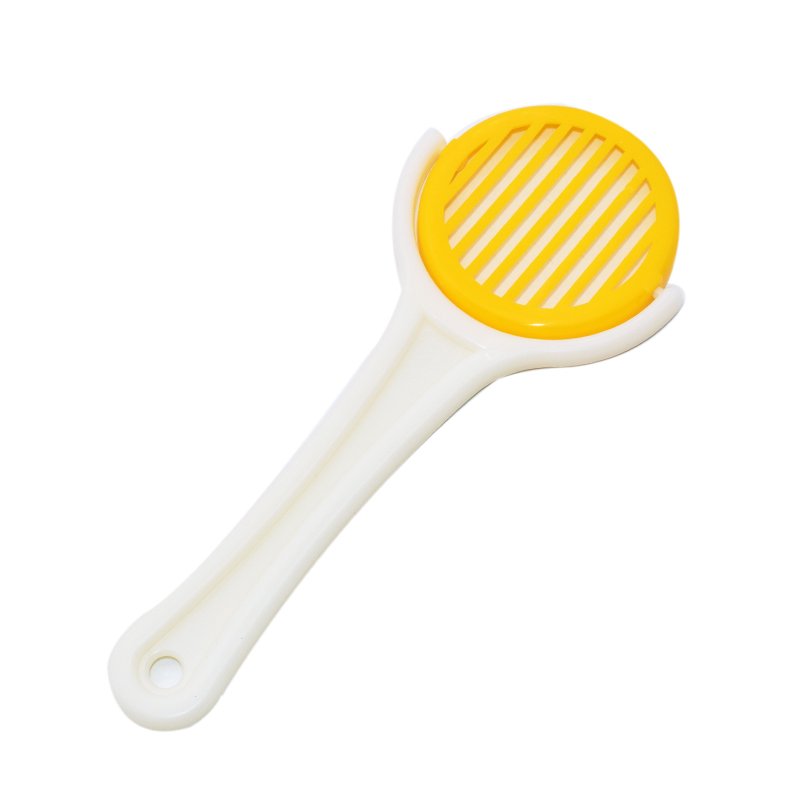
A queen is the one animal in the apiary whose age you can read at a glance, provided somebody put the right colour on her thorax. The international marking code is old, simple and almost universally followed, and it is one of the few management habits that pays back in every inspection afterwards.
This guide covers the five-year cycle, the three tools that do the job, how clipping fits alongside marking, and the records that turn a coloured dot into information a breeder or a commercial operation can actually use.
Why a dot is worth the trouble
Finding an unmarked queen on a frame of forty thousand bees is a slow, uncertain job that frequently ends with the frame put back and the question unanswered. Finding a marked one takes a glance. That difference compounds: a marking programme turns queen-finding from a search into a check, which means splits, requeening decisions and age assessments happen when they should rather than when there is time.
The second gain is diagnostic. A colony that has quietly replaced its queen produces an unmarked queen where a marked one was expected. Silent supersedure is otherwise very easy to miss, because the colony keeps laying and the brood pattern stays reasonable while the queen you were managing for has gone. A missing mark is the earliest reliable signal.
The third gain is commercial. Queen breeders who supply mated queens mark to the code because buyers expect it, and a correctly coloured, correctly recorded queen is easier to sell into a market where provenance matters.
The five-year cycle
Colour is set by the final digit of the year in which the queen emerged. Five colours repeat in a fixed order: white, yellow, red, green, blue.
| Year ends in | Colour | Recent and coming years |
|---|---|---|
| 1 or 6 | White (or grey) | 2021, 2026, 2031 |
| 2 or 7 | Yellow | 2022, 2027, 2032 |
| 3 or 8 | Red | 2023, 2028, 2033 |
| 4 or 9 | Green | 2024, 2029, 2034 |
| 5 or 0 | Blue | 2025, 2030, 2035 |
For the current year the answer is white: a queen that emerged in 2026 carries a white mark, and a queen still carrying blue in a 2026 apiary was marked in 2025 or 2020. The traditional mnemonic for the order is Will You Raise Good Bees — white, yellow, red, green, blue.
Five colours are enough because of how long queens last in practice. Most commercial operations replace queens within two to three years, and very few individuals pass five. By the time a colour comes round again, the queen carrying it from the previous cycle has almost always gone. The caveat is that the mark records the year of marking, not the year of emergence: a queen marked late, or remarked by a previous owner using a different convention, can carry a colour that misleads. Treat the mark as strong evidence and the record as the authority.
Pens, discs and numbered tags
Three tools cover almost every situation, and they answer different questions.
| Method | What it identifies | Best use | Limitation |
|---|---|---|---|
| Water-based marking pen | Year of marking, by colour | Production colonies, quick work, high throughput | Paint can wear or be groomed off over a long season; no individual identity |
| Plain opalith disc | Year of marking, by colour | Colonies handled regularly where a dot must stay visible | Needs adhesive and a steady hand; disc can be lost |
| Numbered opalith disc | Individual queen identity plus year colour | Breeding lines, instrumentally inseminated queens, trial colonies | Slower to apply; the number has to be read close up and written into records |
Paint pens must be bee-safe and water-based; solvent markers are not appropriate on an insect. Discs are attached with a small drop of shellac-based adhesive on the thorax, which sets quickly and holds for the life of the mark. Whichever is used, the amount matters more than the method: a small dot on the centre of the thorax, clear of the eyes, antennae and wing bases, does the job. A blob that spreads onto the wings or the head does harm and looks like a mistake to anyone inspecting later.
Preparing the tool before opening the hive is the difference between a thirty-second job and a fumbled one. Test the pen on a scrap of card to see how much paint it delivers, have the marking tube or cage within reach, and keep the record sheet where you can write on it without putting the frame down.
Marking without harming her
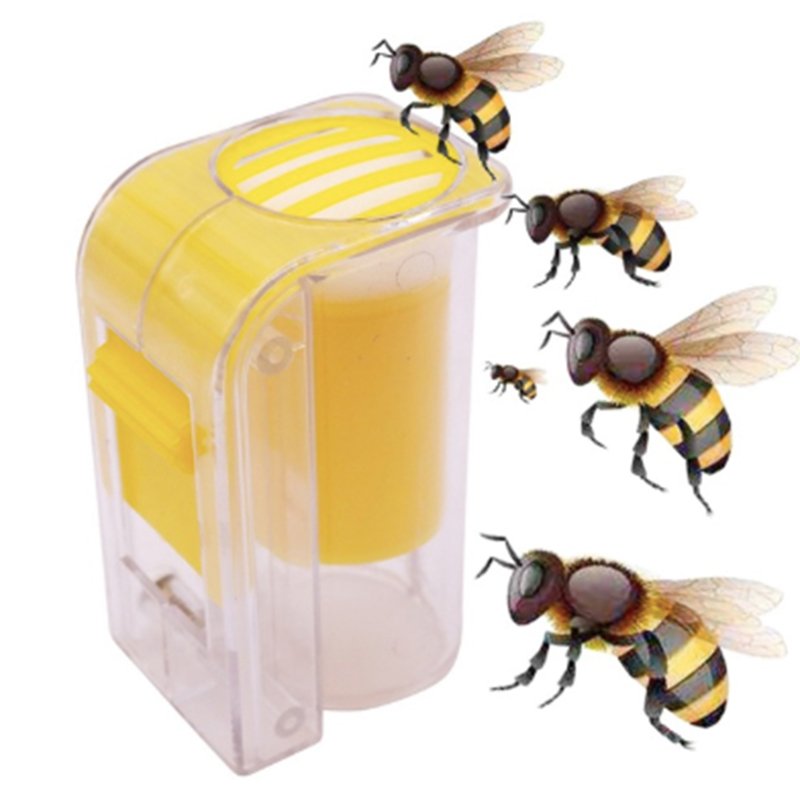
The sequence that works is calm and short. Find the queen on a brood frame, working from frames with eggs and young larvae outward. Trap her against the comb with a marking tube or one-hand cage so that the thorax is exposed and she cannot move. Apply one small dot, or set the disc, and let it set before releasing her onto the top bars and watching that the workers accept her.
Three things reduce risk. Work in good weather when the colony is calm and most foragers are out. Do not mark a virgin queen before she has mated and settled, because handling stress at that stage is the most likely to end badly. And practise on drones first: they are larger, they do not sting, and the paint behaves the same way.
Where a queen is being introduced anyway, marking before introduction is easier than marking later, because she is already confined and the colony’s reaction is being managed. Where she is being marked in a running colony, avoid doing it during a flow when the hive is crowded, and avoid robbing conditions, when opening up invites trouble from neighbouring colonies.
Clipping, and what it does not do
Clipping removes the outer part of one forewing, usually on one side only. It is a separate decision from marking and it does not affect laying. What it changes is flight: a clipped queen can still leave the hive but cannot fly far, so a swarm that leaves with her typically returns, and the colony is less likely to be lost to the trees.
It is not a swarm control method on its own. A colony that has decided to swarm will still do so, and a clipped queen may simply be lost on the ground in front of the hive, which leaves the colony queenless rather than settled. Clipping is best treated as a way to keep a valuable queen recoverable and to buy a little time, alongside actual swarm management.
There is also a husbandry argument against clipping in some markets and for some buyers. If queens are being sold, check what the customer expects before clipping: an unclipped queen is the default for most breeding stock, and a clipped queen is a statement the buyer may not want. Marking has no equivalent objection, which is one reason it is done far more widely.

The record is the point
A colour on its own tells you a year. A record tells you a performance history, and that is what supports requeening decisions and breeding selections.
The fields worth keeping are short: colony identifier; queen identifier where a numbered disc is used; marking colour and year; source or breeder; whether she was introduced as a mated queen, a virgin or from a cell; date of introduction; and the observations that follow — brood pattern, temperament, swarming behaviour, and the date she was replaced or lost. Where the same breeder supplies repeatedly, the source line is what lets you compare lines across seasons.
Two habits keep the record honest. Write the entry at the hive, not at the end of the day. And reconcile marks against records at the first full inspection of the season, because that is when a supersedure from the previous autumn shows up as an unmarked queen in a colony that should have a marked one.
When not to mark
Marking is close to routine, but there are moments when it is the wrong move. A newly emerged virgin should be left alone until she has mated and started laying, because she is still settling and the risk of damage or rejection is at its highest. A colony that is already defensive on a cold, windy day should be left closed: handling a queen while workers are agitated is how queens get balled. And a queen that has just been introduced through a cage should not be pulled out again for marking until the colony has accepted her and she is laying, because the introduction is not finished until the workers are tending her.
There is also a case for leaving one or two colonies unmarked on purpose. An unmarked colony is a useful control when you are training staff to find queens, and it is a reminder that the mark is a management aid rather than a requirement. What matters is that the choice is deliberate and recorded, not that every queen in the apiary carries paint.
Before the season starts: a short checklist
- Confirm the colour for the year from the code, and check the pens or discs in stock match it — a mixed drawer of last year’s colour is the usual source of errors.
- Test each pen on card; discard any that have dried out or deliver an oversized dot.
- Check the marking tube or cage for cracked mesh and free-moving parts.
- Confirm adhesive is in date and has not thickened; shellac that has sat through a summer is unreliable.
- Print or set up the record sheet before the first inspection, with colony identifiers already filled in.
- Decide the policy for the season: mark only, mark and clip, or numbered discs for breeding stock.
- Brief anyone else working the apiary on the colour for the year and where the records live, so the same convention is used by everyone.
The regulations and disease context around queen handling differ by country, and the UK’s National Bee Unit publishes the inspection and movement rules that apply to queens and colonies. For the research side of queen quality and colony performance, COLOSS coordinates much of the European work, and the British Beekeepers Association keeps practical guidance for members.
The tools themselves are simple enough that quality is about the fit rather than the feature list. A queen marking tool with a tube cage holds her without pressure, a marking pen set with the age-code colours removes the temptation to substitute whatever is in the drawer, and a one-hand marking cage is the version that works when there is nobody free to hold the frame.