Pollen substitute protein patty feeding is a timing exercise before it is a product decision. The same patty produces a strong colony or a wasted one depending on when it goes on, how much of it goes on, and whether the colony would have found the protein in the field anyway. Commercial operations feeding hundreds or thousands of colonies cannot afford the second outcome twice.
This is written for buyers running a feeding programme across a working apiary or a pollination contract, not for a single backyard hive. Where the numbers below come from published trials or supplier feeding guides, the source is named. Where they depend on local forage, treat them as a starting point and measure consumption on your own colonies.
Why the calendar matters more than the recipe
A worker bee takes 21 days from egg to adult. That single number sets the planning horizon. A patty fed today does not change the population today; it changes the nurse bees that feed the next round of larvae, and the effect only shows up once those larvae have emerged and taken over nursing duties.
The common industry rule follows from that arithmetic: feed continuously for about six weeks, or roughly two brood cycles, if you want a measurable change in colony strength. One patty does not do it. Commercial feeding guides describe three rounds of patties at roughly two-week intervals as the practical equivalent of a continuous programme, which is easier to schedule across a large operation than a daily top-up.
The mechanism sits with the nurse bees. Young workers consume the most protein in their first days of adult life, with maximum consumption around day five after emergence, while they are still developing the fat bodies and hypopharyngeal glands they need to produce brood food. Without protein in that window, the gland does not develop properly and larval feeding suffers regardless of how much syrup is in the hive.
What the trials actually measured
USDA-ARS work comparing commercial diets against natural pollen and high-fructose corn syrup produced the clearest published result on the yes-or-no question. More than 80% of colonies fed a pollen substitute or natural pollen kept rearing brood through the trial, against about 30% of colonies fed syrup alone. Two of the diets tested, BeePro and MegaBee, were consumed at rates comparable to pollen cake; one, FeedBee, was consumed significantly less. In the autumn-winter trial, where the diets were the only protein source, MegaBee patty produced significantly more brood than pollen cake or any other diet. In the summer trial, when colonies were also collecting some natural pollen, the differences between diets largely disappeared.
That second finding is the one buyers should act on. Consumption did not automatically convert into brood. A three-year Canadian study of spring protein feeds found that differences in how much of each product was eaten often failed to translate into differences in brood reared or adult population, and that feed efficiency — bees reared per gram of feed consumed — varied with what was available in the field at the time. The same study reported that all of the patties tested contained the ten amino acids essential to honey bees, but that lysine and arginine were below the optimal proportion in every patty except one.
Composition targets from the published literature are consistent enough to use as a specification. Crude protein content of 23-30% is cited as the optimum range for honey bee nutrition, based on work by Herbert and colleagues in 1977, and the ten essential amino acids — threonine, valine, methionine, leucine, isoleucine, phenylalanine, lysine, histidine, arginine and tryptophan — were established by De Groot in 1953. Total protein alone is not a quality guarantee: high protein without the right amino acid balance, or protein fed far above the colony’s carbohydrate supply, does not deliver brood.
There is also a ceiling on what a substitute replaces. Comparisons of colonies on natural forage against colonies fed protein supplement have reported lower pathogen loads and higher overwintering survival in the forage group. A substitute fills a gap; it does not match a diverse pollen supply. Programmes that keep feeding after the field opens are buying nothing, and in warm, humid regions they are buying a pest problem.
Northern and southern hemisphere windows
November sits at opposite points in the two calendars. In the northern hemisphere it is the back end of the season: colonies are going into or already in winter cluster, and the work is planning the late-winter build-up. In the southern hemisphere it is mid-spring: build-up feeding is running, swarm pressure is rising, and the first honey flows are being prepared for.
| Window | Northern hemisphere (North America, Europe) | Southern hemisphere (Australia, New Zealand, Chile, Argentina, South Africa) |
|---|---|---|
| Pre-flow build-up | Late winter into early spring; start about 6 weeks before the target flow. For February almond pollination, colonies are targeted at 8 frames of bees by 1 February, which puts feeding in the November-December period. | Late winter into spring, roughly August to October. New Zealand operators report feeding in August to avoid the customary September collapse in bee numbers. |
| Post-flow / autumn recovery | Late summer into autumn where forage has dried up; keep feeding only while pollen is genuinely absent. | Late summer into autumn, roughly January to March, to rebuild colonies coming off a low-pollen flow such as mānuka before winter. |
| Stop signal | Bees observed carrying pollen into the hive; patty consumption drops. | Same signal, same rule: natural pollen arriving means the programme ends. |
| Risk in this window | Feeding into a cold cluster that cannot reach the patty; uneaten feed moulds. | Small hive beetle and wax moth in warm, humid conditions; uneaten feed spoils in days. |
The six-week lead time is the part buyers mis-plan. If the target flow or pollination contract has a fixed date, count back from it, not forward from the first warm day. Colonies that need to be at pollination strength by early February have to start protein in the previous calendar year.

Reading the colony, not the calendar
Feeding on a fixed schedule is how money gets wasted. Three checks decide whether a round goes on.
- Is pollen coming in? Watch the entrance. Once foragers are returning with pollen in quantity, consumption of the patty falls away and the programme should stop.
- Is there brood, and is it being fed? Larvae should sit in visible brood food. Very young larvae that look dry indicate a nutritional problem rather than a queen problem.
- Are carbohydrate stores adequate? Protein does not replace honey or syrup. A colony with a patty and no stores is still a colony at risk, and starvation shows up as dead bees with heads in cells.
Publication of a start date is less useful than a start condition. Provincial guidance in Canada describes the two natural gap periods as early spring, roughly April to May, and early autumn, roughly late August to September, and the practical rule is the same in both: supplement when the field is not supplying protein and the colony is rearing brood.
Patty size, placement and the beetle problem
Placement is consistent across guides: on the top bars directly above the brood nest, or between brood boxes where the colony is on more than one. Position matters because the bees that need the protein are the nurses, and a patty at the edge of the box may sit untouched long enough to go mouldy.
Portion should follow consumption rate. A patty that is not eaten within a week to ten days is too big, and in small-hive-beetle country it becomes a breeding site.
| Colony state | Portion per feed | Check interval | Note |
|---|---|---|---|
| Small or weak colony | 0.25-0.5 lb (about 115-225 g) | Every 7 days | Small portions reduce beetle and mould risk. |
| Strong colony, active brood | About 1 lb (450 g) | Every 7-14 days | A strong colony can consume 500 g in about 8-10 days. |
| Autumn programme, single brood box | 250 g per feed, 4-6 feeds | Every 7-14 days | One supplier guide specifies 1-1.5 kg total per hive over the autumn period. |
| Warm, humid region with beetle pressure | Smallest portion that is consumed in a few days | Every 3-5 days | Remove anything uneaten rather than leaving it. |
Dry substitute in an external feeder is the alternative where beetles or humidity make in-hive patties risky. It removes the pest problem but it only works when bees can fly: below about 10 °C, or in sustained rain, dry feed is not collected and a patty is the only option that reaches the colony.
Specifying patties for a bulk buy
Commercial operations buy patties by the case or the pallet, and the specification sheet is what separates one product from another at that scale. Ask for these in writing.
| Specification | What to ask for | Why it matters on a large order |
|---|---|---|
| Crude protein | Declared percentage; published optimum range 23-30% | Total protein drives cost per colony but does not guarantee brood on its own. |
| Amino acid profile | Declared levels for the ten essential amino acids, with lysine and arginine called out separately | Two published studies found lysine and arginine below optimal in most commercial patties. |
| Pollen content | Stated percentage, and whether the pollen is irradiated or treated | Supplements containing pollen carry a disease and residue risk if untreated. |
| Particle size | Milling specification from the supplier | Smaller particles improve digestion and uptake in formulations that mill for it. |
| Patty mass | Grams per patty, and patties per case | Drives the portion maths and the number of hive visits per round. |
| Shelf life | Months unopened, and frozen storage limit | One supplier states 9 months unopened and up to 1 year frozen; frozen patties must thaw 1-2 days before use. |
| Storage and handling | Cool dry storage, resealing instructions | Patties dry out, and dried patties are not eaten. |
Shelf life and storage are the two lines that decide whether a bulk buy is a saving or a write-off. Protein feeds lose value sitting in a warm warehouse, and a case bought cheap in the wrong month is worth less than a fresh case bought later. Freezing works where the supplier supports it; check the thaw instruction before ordering a season’s worth.
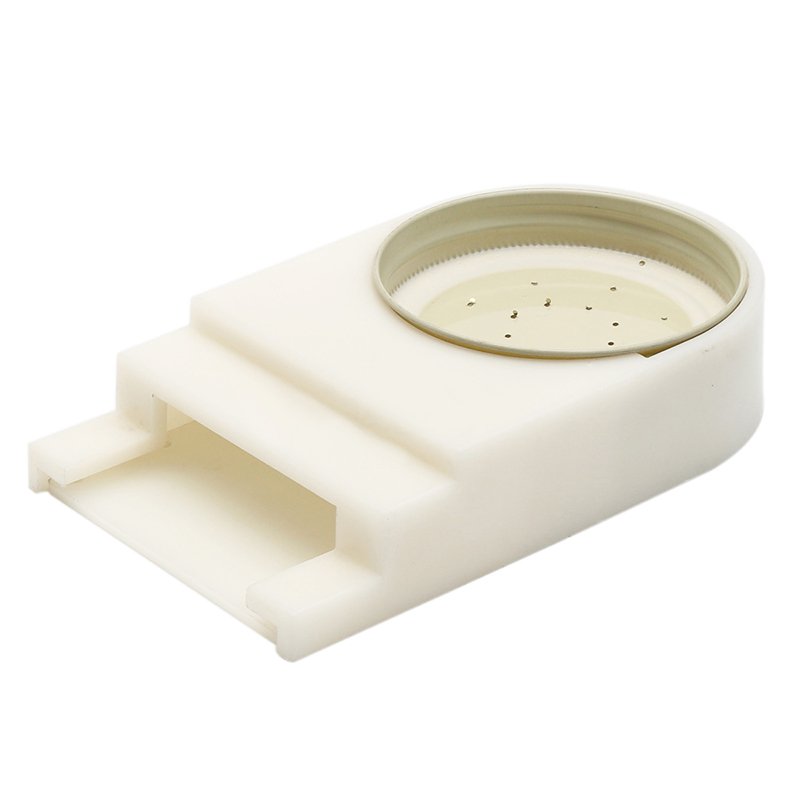
Feeder choice runs alongside the patty programme rather than replacing it. Patties supply protein; syrup supplies carbohydrate, and a top feeder or entrance feeder handles that half of the job without opening the hive every round. The square plastic hive feeder is the common in-hive option for a standing syrup programme, the round rapid top feeder allows refilling without pulling frames, and the plastic entrance feeder suits light stimulative feeding where a full top feeder is more than the colony needs. The full range sits under bee feeders and medicine.

Where substitute fits in a health programme
Nutrition interacts with the rest of colony management rather than sitting beside it. Colonies on poor forage carry higher pathogen loads, and mite pressure on a nutritionally stressed colony does more damage than the same mite count on a well-fed one. Feeding protein into a colony that is about to be treated for varroa, or that has just been split, is a standard use of the product; feeding it into a colony sitting on a good flow is not.
Pollination is the clearest commercial case. A contract with a fixed date and a minimum frame count cannot be met from whatever the field happens to offer in January, and protein feeding is the lever that makes the date. Extension and industry guidance for early almond pollination is explicit on the point: build colonies in the autumn and carry the feeding programme into winter to hit the February target.
The USDA Agricultural Research Service has published several of the diet comparisons referenced here, and the Honey Bee Health Coalition maintains practical guidance on nutrition and varroa management that aligns with it. For the wider forage picture, including why diverse natural pollen outperforms any substitute, FAO’s pollination pages set out the case for managing farmland and forage resources alongside any feeding programme.
Protein patty feeding checklist for a planned programme
- Fix the target date first: the flow or the pollination contract. Count back six weeks, or two brood cycles, to set the start date.
- Confirm there is a genuine protein gap. Check the entrance for incoming pollen before every round, and stop when foragers are loaded.
- Confirm the colony is rearing brood. Protein fed to a colony with no brood does nothing.
- Confirm carbohydrate stores are adequate before spending on protein.
- Buy to a specification: crude protein percentage, declared amino acid profile, pollen content and treatment status, patty mass, shelf life.
- Order in portions that match your round size, not in the largest case available. Match the case to a consumption rate you can check.
- Place patties on the top bars directly over the brood nest, or between brood boxes on a double.
- Size the portion so it is consumed within 7-10 days, and drop to a smaller portion in warm or humid conditions.
- Check every 7-14 days and remove anything uneaten before it moulds or attracts beetles.
- Run at least three consecutive rounds. One patty will not shift the population curve.
- Record consumption per round. Bees reared per gram of feed is the number that tells you whether the product is worth reordering.
- Store unopened cases cool and dry, respect the declared shelf life, and thaw frozen patties fully before use.
- Align the feeding window with your hemisphere: late-winter build-up north, late-winter-to-spring build-up and autumn recovery south.
- Trial a new product on about ten colonies before committing a full order.
What to do with a product that does not get eaten
Poor consumption is usually one of three things: no brood to feed, natural pollen already coming in, or a formulation the colony rejects. Check the first two before blaming the third. If the colony is rearing brood, the field is empty, and a patty is still sitting untouched after a week, the product is the problem — change supplier on the next round and record the difference. Published trials show consumption rates varying sharply between commercial products fed under the same conditions, so the trial on ten colonies is worth more than any specification sheet.
Where a figure in your own programme cannot be measured — feed efficiency, amino acid balance, actual consumption per colony — ask the supplier for a measured test report and run the trial yourself rather than relying on a published average. Published averages describe someone else’s colonies in someone else’s forage.